• DIY PR – How To Get Your Film Reviewed

    DIY PR – How To Get Your Film Reviewed and Written About.​​

    Democratising The Filmmaking Process Volume.
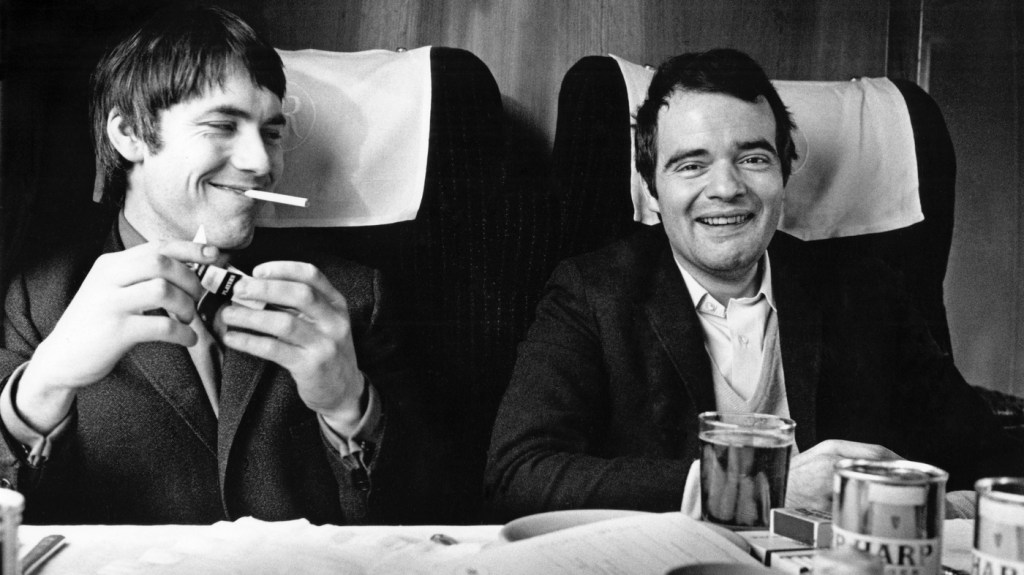
    Chris Stamp and Kit Lambert.

    Making a film is but merely one of the many battles involved in the great movie-making wars. If you have already reached this stage you are likely acutely aware that not everyone is currently sharing your unbridled enthusiasm for your efforts.

    You (and I) know you’ve created a work of genius but sadly the rest of the world has not been given the opportunity to offer their opinion yet; your phone is not ringing, your email box is empty and the trailer you posted on Youtube has only reached 100 views. Nobody seems to want to watch or write about your film, which is frustrating.

    Sadly this is the case for almost all micro budgeted films. The film industry is unfairly biased towards those with money, because money allows expensive marketing.

    The reason you don’t have the money to spend on PR agencies, marketing companies or advertising is because you quite rightly spent every penny of your small budget on actually shooting your film. When money is super-tight, or almost non-existent you have to prioritise where it seems better spent, meaning most micro-budget filmmakers understandably sacrifice their marketing budgets and ‘hope for the best’ later. Without large festival or distributor support you can end up hitting a wall, but if this happens you can still help your film find a respectable audience by yourself, and for free.

    What can be done then?

    Without money there is still a lot of good promotion which you can carry out. You might not be able to afford a 100′ poster in Time Square but by using this short guide you will hopefully manage to let a small part of the world know of your film’s existence. And because you and the friends who made the film are smart and full of brilliant ideas you can also add your own into the mix.

    At this stage we should be very clear that this is not a quick fix to becoming the next Robert Rodriguez or having the world’s media suddenly appear at your doorstep. This won’t get you Empire and Guardian reviews. With some hard work however, it is an opportunity to gain a little extra international interest in your film and help it be seen, reviewed and written about beyond your local newspaper and friends Facebook pages.

    Ideas and Attitude

    It’s important to stress that good ideas are often more important than money when marketing, which is handy. Most importantly though, to achieve successful results you will need to follow your ideas through to the end. Everyone has good ideas but not everyone has the determination needed to fulfil them. Tenacity is how successful results will start to appear, and this type of promotion takes time and patience.

    My previous guide to uploading films to Amazon is an important companion to this current one. They both symbiotically rely on each other – because to sell something you need product, and if you have product you will want to sell it. Your film is your product and Amazon will be one of your key selling markets. You just need to let people know it’s there!

    I’l start with the assumption that your movie has either already completed a festival run or you have decided to start selling it without one.

    ***Note: A later guide will uncover the crazy world of Film Festivals which will also play another important part in your films distribution journey. Festivals can help to sell and promote your film in their own right but they need to be handled carefully as they can equally do harm, which we will discuss later ***

    For the purposes of this guide we’ll use one of my own films, Night Kaleidoscope, to help illustrate DIY distribution methods. It was sold as physical copies and also released it on Amazon (as an update it will shortly appear in shops).

    This film was made on an incredibly small budget for a feature (around £3K), it did not contain any Hollywood stars and was described as an awkward art-house horror, or just not very good if being harsh! Without any marketing budget or distribution the movie did not really stand much of a chance. While it was never going to become anything close to a Paranormal Activity success, with some home DIY PR I did mange to get some review (both good and terrible), screened it worldwide and had over 100 articles written about it; which seems like a decent example for other DIY Feature promotions looking for similar results. It was small but managed to lift itself up a little. At the very least it managed more than 100 YouTube hits.

    Below is our guide to how I and some friends marketed a film that was not an easy sell, and because your film is probably better you will be able gain better results than me.

    Initial Steps

    At present you may be in a similar situation as to where I was: I’d completed a film and nobody seemed to show any interest in it.

    After we had finished shooting Night Kaleidoscope I realised I didn’t really know how to market it. For various reasons of working on other productions the film had been sitting on a shelf for a couple of few years, and would still need to remain there for another year, albeit fully finished. Because it had such a distinct visual and aural style, which then appeared fresh (one of its redeeming features) it was felt to be in danger of loosing one of its selling points if it stayed there much longer; to start, we quickly decided to release a teaser trailer which in hindsight was a good move. This trailer made the film appear far more expensive and interesting than it was in reality. A good trailer is definitely a recommended move which helped us significantly with promotion! We’ll cover trailers later.​​

    A less recommended move for those on small budgets was what we did next. We employed a very small PR firm to help market our trailer, purposely to dip our toes into what could potentially be achieved with the finished film. The small PR firm managed some reasonable results but moreover it made us realise that unless you are spending (and can afford) thousands of pounds on large scale promotion you can just do it yourself and save money! You can achieve the same results on your own and This will show you what I did so that you can too.

    The time from our first teaser being released to our actual film release was a year. Teasers are usually the domain of large movies but they can prove useful in situations like ours. It allowed us an online presence which would later make the marketing of our final release simpler. It can be risky as often promotion is a ‘one chance’ opportunity but in our experience with small micro-budget films it can help. Especially if you know there will be a large gap before your final release.

    Deconstruction Time Again

    A large part of my filmmaking philosophy is based on a belief in the importance of deconstruction – for me, that means the process of showing the making of a film being an overall component of the final product. Deconstruction can help you promote your movies and is something I encourage everyone to explore. A veil of secrecy is often placed on the filmmaking or marketing process by people understandably wanting to protect their business model, which again does little to help emerging talent. Taking something apart can help you discover how something works (please don’t try this marketing theory on puppies) and you should carefully look at how movie marketing is done by the professionals to help you. Observe, analyse and deconstruct how somebody else markets a movie.

    The Simple Steps to Marketing Your Movie . Step One

    Learn by example. Pick a reasonably successful independent film from the last few years, not Marvel size but something you are familiar with which which did relatively well. Type that films name into Google (using quotes) followed by “Preview” or “Synopsis”.

    Ignore any reviews, Wikipages or sales links which appear in the search results for the moment. A close look at these remaining search results will show they are mostly from large blogs or entertainment pages. When visiting these pages you will see they all soon start to appear very familiar: a trailer with strangely similar phrases in the article copy or headline. What you are seeing is the results of a successful and controlling press-release.

    A great press release is the best friend to an indie filmmaker.

    Write what you want to see. Press Releases are written with the intention that key parts – and in some cases the entire press release will be posted on a film site. You can very much use this to your advantage when marketing your movie. Think what you would like written in an ideal article and if you put this in a Press Release there’s a good chance it will end up being written word-for-word, rephrased or at least led carefully by your own words which you used in your Press Release.

    It should be noted that these journalists are not being lazy. For small films, writers just don’t always have the time to dedicate their energy to unique articles and tend to base them around the press releases they receive, especially those for Micro Budget Features. Taking advantage of this knowledge can significantly help present a strong online presence and positive bias for later reviews of your film – providing you maintain the balance correctly!

    Of course journalists know this too so you offer them a good balance – you help them by being realistic about your film, and providing suitable phrases and they help you by writing an article similar to your press release copy.

    You will soon see that most film previews follow these fairly rigid rules based on what you send them; the press release, as discussed when sent along with a trailer, a poster and some stills is otherwise known as The Press Pack.

    Let’s make a press pack which will start your movies online presence.

    Creating Your Press Pack:

    A – The Press Release.

    There are various ways of formatting these and we often chop and change them but they should follow some set rules.

    They should contain 3 (or 4) important sections for conveying information easily and quickly to a journalist and are usually formatted similarly.

    1 – At the top (sometimes bottom) is your contact Information: Production Company, email address, website, Facebook. Twitter, Phone Number and a Contact Name are recommended, though you don’t need to include them all.

    2 – Below this (if at top), an arresting headline containing the information you are trying to convey, or a concise statement. This can be the announcement of a trailer release, a full film release, a crowd funding campaign or whatever. Don’t just send a release with the intention of telling the world of every small detail. You only get a few chances at keeping somebody’s interest.

    This only needs to be brief, a little like your films logline. Further information can be given. Just keep it snappy, to the point and sounding interesting.

    Importantly, you will have to let the journalist know when this event will take place (physical copy press/newspapers/magazines takes weeks not days). Often big press releases will have embargos so they need to know when they can print.

    3 – The main body of your press release is for further and fuller information. This is a little like your film synopsis compared to logline. This is where you will sell your product/announcement to a journalist and whether they think there is enough of a story to make an article from it. Make it easy for them! Don’t overcomplicate. Keep the entire release to a page.

    Don’t write ‘it’s not very good’ – because that is what they will write. Don’t write ‘this is the greatest film ever made’ – it’s not and they won’t believe you. This is their daily job and they receive many press releases daily so respect their intelligence while still keeping it interesting.

    Write what you’d like to see and cover up any negatives regarding your film by turning them into positives. Help them and they will help you.

    For example, our film didn’t really have much of a story and we knew that would be picked up by reviewers so we put “story and logic come secondary to atmosphere and terror, a dreamy nightmare captured on film.” to give the impression this was always intentional (which genuinely was true).

    For the announcement of our films availability, and because we had already put out our trailer, we had some previous online presence, and this allowed us to add some quotes from previewers/articles about the trailer release. Tread carefully if using quotes as there can be rivalries between reviewers. Not every website is equal, they all operate at different levels of experience and reach. We decided to use quotes from two of the bigger sites as a way to hopefully subtly influence other reviewers (which does not always work).

    4 – A link to what you are announcing – which in this case was it becoming available on Amazon – we gave that link and also a screener for review/advertising purposes. Don’t expect reviewers to pay to see your film. A trailer and online stills links should also be added. If you forget this they won’t bother contacting you to ask for them. Don’t worry about passwords as they will not print them. Links to stills rather than clogging up someones inbox.

    Most importantly….make sure you have ‘….ends’ at the end so they know that your Press Release, well ends.

    Here is our own Night Kaleidoscope Press Release (apologies for formatting here):

    Year Zero Filmmaking: Tartan Features

    05/01/2017

    For Further Information Please Contact Simon:

    info@nightkaleidoscope.com

    @nightkaleido

    http://www.facebook.com/LandofSunshine

    https://www.yearzerofilmmaking.com

    For Immediate Release:

    PUNK ROCK CINEMA!

    Vampire Indie Horror ‘Night Kaleidoscope’ Finally Available:- On Amazon Prime, Region 2 DVD…. and VHS!

    *****************************PRESS RELEASE*********************************

    AVAILABILITY:

    Amazon Prime:

    US:https://www.amazon.com/Night-Kaleidoscope-Patrick-OBrien/dp/B06XCS9PKB

    UK:https://www.amazon.co.uk/gp/video/detail/B06XCZ4V4R

    R2 DVD and VHS PAL

    https://www.xxxxxxxxxxx

    *******************************************

    “Breathes New Life into the Vampire Genre’ – Dread Central

    ‘Strange, Beautiful and Sexy’ – Modern Horrors

    Just two of the quotes from the intense flurry of interest after the release of the Night Kaleidoscope trailer last year.

    Fresh from its preview screening at the Atlanta Days of the Dead Horror Convention, you can finally watch Night Kaleidoscope on Amazon Prime, buy on Region 2 DVD and even purchase a very limited VHS edition. Region 1 and NTSC VHS and Very Limited Betamax to follow….

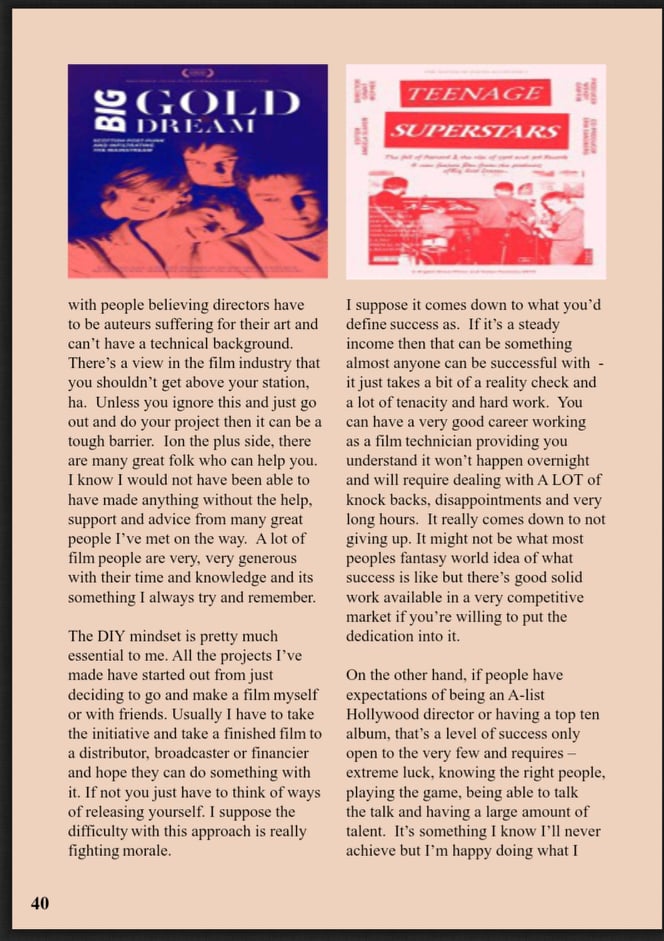
    Night Kaleidoscope is the third feature from director Grant McPhee, following on from the success of his Post-Punk Documentary – Big Gold Dream, listed as one of Sight and Sounds best films of 2015, an Edinburgh International Film Festival Audience Award Winner and a recent screening on BBC TV.

    Night Kaleidoscope is a very different film but maintains a similar punk rock attitude throughout.

    Bridging a fine line between the trashy 70s Euro Horror of Jess Franco, the British Art-House miasma of Nicholas Roeg and the underground experiments of Kenneth Anger Night Kaleidoscope manages to become a unique film of its own.

    The film is a treat for the eyes and ears – trippy, psychedelic imagery flashing against a pumping 80s synth rock score – story and logic come secondary to atmosphere and terror, a dreamy nightmare captured on film.

    It is the story of Fion, a hardened psychic detective (Patrick O’Brien) who is happy to work for the highest bidder. His latest case proves to be his toughest challenge yet when faced with depleting powers – which he tops up by smoking a mysterious psychedelic powder – Fion encounters a mysterious wave of murders across the city’s poor and deprived. With the aid of Isobel (Mariel McAllan) their investigations lead them to enter a world of ancient evil in the form of a beautiful but deadly couple – Carrie and Lewis. Set against the backdrop of a decaying city viewed through a Night Kaleidoscope.

    Night Kaleidoscope is a brash, bold, surreal, stylish and hip entry to the aging Vampire Genre. One where all rules are broken and is part dream, part nightmare.

    Shot on a budget smaller, and a time-frame less than most films have for their trailer, Night Kaleidoscope manages to elevate itself above its limitations by use of imagination and a desire to challenge the perception of Micro Budget Feature Filmmaking.

    Night Kaleidoscope is not like anything you’ve seen or heard before.

    ********************************************************************************

    Screener for Review:

    password: xxxxxx

    TRAILER:

    Stills:

    ENDS****************************

    .

    The purpose of your Press Release is two-fold. No journalist is going to jump in and review your film because you have bestowed upon them the honour of your screener link. It has to be written to interest them and make them want to watch but also, as we discussed, to also appeal to a reader – and buyer.

    Sell them a story, cover over any flaws which could potentially cause a negative reaction and absolutely make it stand out from the hundreds of other press releases they receive every day.

    Below are a few articles which have used the Press Release we made in various forms. Some have just copied from it directly, others have taken phrases while others have reworded it significantly, but all have used it. Take advantage of what you want to see.

    Night Kaleidoscope (2017)

    https://letterboxd.com/film/night-kaleidoscope/

    http://www.infernalcinema.com/2017/03/07/night-kaleidoscope-gets-uk-dvd-vod-and-vhs-release/

    http://decaymag.com/movies/reviews/night-kaleidoscope-film-review/16327/

    All of these articles are perfectly welcome and all equally useful to you. The journalists are busy and what they can afford to spend on your film depends on how much time they have on a particular day, and understandably bigger films will be their priority. Anyone who prints ANYTHING about your small film is helping you and you should thank them for that. They are doing you a very big favour – they are essentially advertising your film for free.

    Building a relationship is critical to your marketing and maintaining that relationship is crucial to the success of your later films – and career. You will make friends and you will meet people who love your film, you will also meet people who hate your film. Don’t be defensive and attack them. What they write actually may sound ideal to another reader/potential viewer. While it is nice to have good reviews bad reviews are better than no reviews!

    All of the journalists who created the articles above (and this was a random selection from many) are now friends or associates whom we contact directly regarding other films. Be loyal to those who help you.

    Our final tip on Press Releases – save them with an appropriate and identifiable filename – not just ‘Pressrelease.doc’. And use multiple formats for different software they may be using. A reviewer will have many press releases in their download folder – make sure they can recognise yours at a later date.

    The Press Release is the first impression of what you are offering, the second will be a trailer and then poster or stills. Once you have their attention from your press release, to really stand out you need to make a good trailer.

    B – The Trailer

    There is a fine balance between cheating your audience and building audience support. To further make a point – for small films and a sustainable career you need to build friendships so think carefully about your trailer and how it relates to the full film. Don’t cheat reviewers by presenting a different story in the trailer to that in the final film – and most importantly don’t cheat your audience. Nobody likes to be cheated and it will reflect badly on you. As mentioned, you need support because as soon as somebody offers you the courtesy of watching your trailer and deciding to review it; if the full film is a completely different genre they will react negatively. This is different from an unexpected plot twist.

    When a journalist becomes interested after reading your Press Release you are still on shaky ground as to whether it will still be picked up. Don’t loose out on a review or article by messing up with your trailer.

    Market your film within a recognisable genre!

    Of course not all films fall directly or easily within a set genre so it is completely acceptable to nudge it a little if it lies on the border. Our film had enough horror elements to easily fulfil that criteria but it also had a style which could be classed as experimental, or art-house. Theses sub-genres allowed us to later market to a wider and slightly different audience. Take advantage if your film falls into other categories. Just be cautious.

    Trying to market a film as something which it clearly isn’t may have short term gains but you will eventually set yourself up for a fall. If your film is a light-hearted comedy but has a trailer which suggests it may be a slasher you are heading for a negative review, or worse – no review or article at all. Think of your audience and remember that journalists are part of that. And respect them.

    As with your press release, show what you would like to be talked about. Use your best material and leave the audience wanting more. If you don’t have a lot of great material then keep it short. Two minutes or under is a good time length.

    Don’t use material which may lead to negative reviews. Be creative with your flaws. Our film was not very strong on dialogue so we left most of it out of the trailer. This is not cheating an audience, just being a little creative in how you polish it. Big up what you have. There’s a world of difference between a great trailer for a poor film that’s honest and a trailer that tries to market an entirely different film. Reviewers and audiences expect the best material to appear in a trailer and they accept films don’t always live up to them but they don’t want to be sold a different film. Gone are the days of Roger Corman where it’s too late to ask for your money back.

    Follow the steps and lessons from your Press Release. Offer enough information, make is seem interesting and present the important details – Title, Cast, Whatever. Imagine yourself writing how you would like your trailer described and work backwards from that.

    After you are happy with your snappy trailer be aware where you upload it to. If it is on YouTube make sure your channel is tidy and the appropriate film details are clear. Don’t have titles like ‘201123axbs.mp4’. A solid description with metatags is also recommended.

    If you send a Dropbox link consider this may be a deciding factor to whether a journalist will pick up on it. They likely don’t want to have to download it and then upload it to their own site for sharing. Make it easy for them.

    C- Set Stills, Behind-the-Scenes Stills and Poster

    I’ve made the mistake of not getting enough set stills. I’ve made many poor decisions before, and will do so again but not generating enough stills is much more harmful than you may expect, and certainly one of our bigger filmmaking regrets.

    As touched upon earlier, online previews often all follow a similar set of rules – they use a press release to form a large part of their copy. As you can imagine this leads to many similar articles being created, which is not a bad thing but can cause you small problems. As a rule of thumb, the more coverage your film has, then the better, but unfortunately Google has an annoying habit of hiding some of these results if they appear similar to others. On the last page of Google results you will find a small hyperlink called ‘Repeat Search With Omitted Results Included’ which will reveal any hidden articles which make use of your Press Release. Obviously, by being tucked away after the very last result means not everybody sees this option which results in a lot of pages about your film being overlooked.

    Many journalists are aware of this and try and tweak the copy so they don’t risk having their page fall into this abyss, but not all do. One way to help yourself is by having a large variety of photos to help distinguish articles.

    Regardless of Google’s tendency to hide some pages a wide selection of photos is great for journalists anyway.

    A Dropbox link is great for sending photos (unlike your trailer) as journalists prefer to upload directly. A good tip is to name your photos well. Rather than img1002.jpg or whatever, name them after your film title and the actors seen. Other than making it simple for the journalist and lessening chances of misidentifying your cast, it works well for Google searches. Google will identify and log the information. Flickr is also a good option for sharing but you lose the metadata when a journalist downloads.

    Good quality photos are essential. Screenshots from your actual film are OK to use as a last resort but often problematic. Even at 4K they often lack sharpness due to motion camera shutter angles. It is always a struggle to generate enough publicity stills due to time and crew restraints. Your social media interactions are going to require that you have a very large selection – for your own Twitter/Facebook/webpage promotion and also for sending to journalists. The wider a selection you have, the more opportunity for diversity for journalists – and more articles. In a perfect world, after each set-up when filming you should allow a professional stills photographer the opportunity to capture high resolution, high quality set stills. Behind-the-scenes photography and video is also going to be incredibly helpful. Please, please, please do not ignore this. I’ve made this mistake and know how much it will hinder your later promotion. There is always the argument that it is better to complete your filming at the expense of onset photography, but I’d always say that you will regret not having sufficient promotional material. If you are struggling then have your crew take snaps throughout the production on iPhones. It is not ideal but better than nothing. Properly set up, high quality promotional stills will be worth the time spent, even at the expense of dropping a shot. Reviewers love these and a potential article will rely on having them. If you’re crew are taking stills for you gently remind them to not post onto social media.
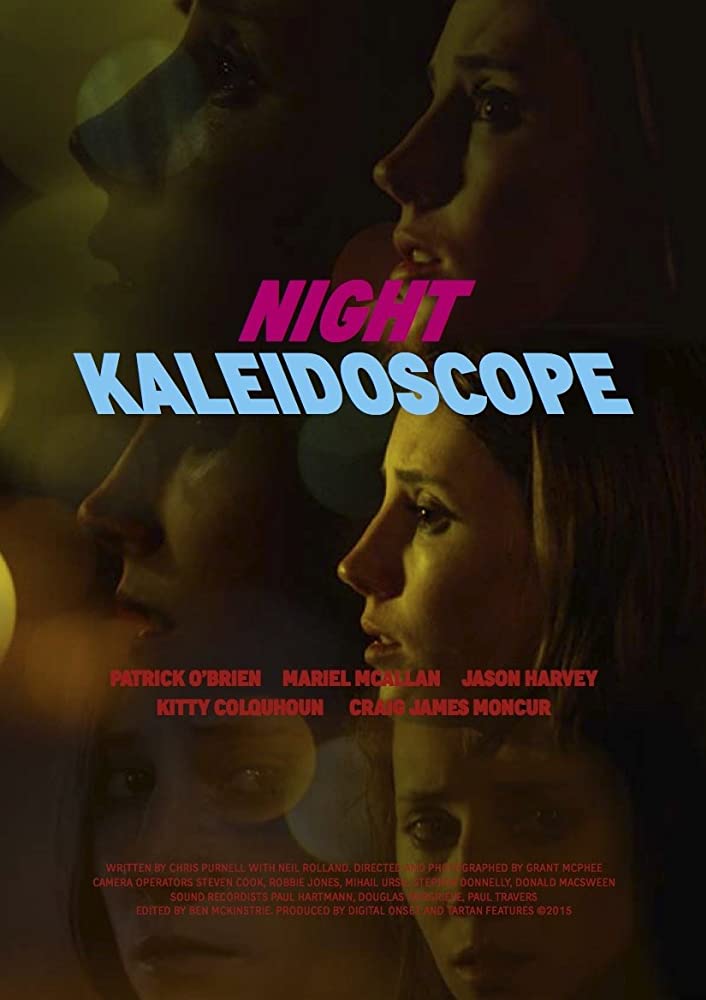
    Your poster will be another of your key marketing tools. Other than being used to send to journalists it is the first impression – after the title – that potential buyers will see. I try to make a unified ‘house look’, inspired by independent record labels and use a Swedish record cover designer to use garish and bold colour palettes to stand out. They don’t always follow the film poster rules but people can spot them easily. A distinct poster will help you – with reviews and buyers.

    Now that you’ve created your Press Pack you need to get it out to reviewers.

    Step 2– Next. Where to send your press pack.

    This is the million dollar question. Where to send it, and how to send it.

    It’s very important to stress that you have to be realistic with expectations. Your film will not be reviewed in the next edition of Empire, Total Film, Sight and Sound, The Guardian, The Times or anywhere on the high street for that matter. There are always exceptions to the rule (like winning the lottery) so there’s no harm in trying but your efforts will be better focussed on other options. Use your time and energy in these other ways and you may find they benefit you more.

    The Internet

    The internet is a great place. It’s democratised publishing and opened up a whole new outlet for film reviews and advertising. Luckily for us it is still mostly free and we are going to take full advantage and focus our own efforts there.

    One of the internet’s greatest achievements is simplifying bringing like-minded people together and we’re going to try and find people who will like our film.

    Almost everybody loves watching movies. Because of advances in technology some like-minded folk are able to switch that love of watching films into making our own, but others will use that love to write about movies. And these are the people we want to connect with and get to write about our film.

    Because we have already defined our film within a set genre this makes finding people who will like our genre easy. In many ways a niche film, counter intuitively may actually be more beneficial to you.

    Twitter is probably going to become your new best friend. It is effectively a giant database, one which can be used to open up a very large marketing opportunity.

    Having a horror movie to promote is probably the the easiest genre of all to market. Horror Film fans are incredibly loyal – and helpfully – incredibly forgiving. Actually they seem to be far more open minded than mainstream film reviewers and much more accepting of the rough edges often seen in independent filmmaking. There is an incredibly large community of horror fans very willing to write about your film.

    Finding Your Reviewers – This is VERY time consuming!

    You probably already have a Twitter account but I’d advise to either setting up a specific one for your film, or one for your production company. There are pro’s and con’s for either which you can work out for yourself later.

    Like with your Press Release and trailer you need to make your Twitter page appear interesting. Have a nice clearly displayed poster, title and an exciting sounding bio.

    Post a few stills on your page. If the purpose is to promote your film being released on Amazon then you can post your trailer too – just do something which makes your page stand out from the hundreds of others. If your initial purpose is to promote a release of your trailer, or a crowdfunding campaign perhaps leave your trailer until a little later when you have built up more followers.

    Use the search options which Twitter kindly provide and start following targeted accounts. Start with a more focussed and select group first. The search criteria ‘Horror reviews’, under the ‘people’ tab will bring up thousands of Horror Film Review accounts. Follow them all. With luck some should start following you back.

    Once an account follows you back you have then reached ‘stage one’ in your new friendship. More often than not these Twitter accounts will form part of a separate blog or webpage. If there is a link on Twitter then follow it, if not then use Google to search. When visiting a linked website navigate to find their contact email and note it down using a spreadsheet, along with the websites name and address. Ideally you should find an actual persons name to go with that email address. Names offer a greater chance of successful reviews or articles later as they offer a personal and friendly touch. And it’s just good manners anyway. If the contact page does not offer any names then check the ‘about’ section, or even look for names under reviews.

    Looking again at Twitter, after being followed back, if you have not directly communicated with your new contact, at some point send them a direct Twitter message asking if they would mind you sending them a Press Release for your new film. Often people don’t tend to like receiving direct messages from unknown people but if you make your message personal and sound like you have done a little research it is often a great introduction. You may often get a more direct email address using this route rather than merely looking at their website, especially useful when the website just has a contact form. Kevin@xxx.com is better than info@xxx.com. There’s a fine line between just spamming people and building up a normal and human interaction. Don’t just send people an unannounced press release as a message the second they follow you back. It’s not polite. A lot of these accounts are just like you. Look at peoples work, they put a lot of time and effort into it, just like you did with your film so appreciate it and like/interact with it. Everyone is ‘hustling’ to an extent but take a deep breath.

    When building up contacts, detail as much of your notes onto your spreadsheet as possible. They will be invaluable later. Names and just knowing who people are is nice.

    This is not a quick process. Results are slow and this is where your tenacity will determine whether your film will receive some kind of recognition. But enjoy it, enjoy interacting with people and regardless of whether someone reviews a film you might find some people you like.

    At some point you will have built a very large spreadsheet of review contacts to hopefully try sending your press release to. Some will be direct email addresses for your new Twitter friends – make a special note of these. Some will not have replied to your direct Twitter message at all– also note down. And some may not have even followed you back on Twitter – if this is the case you can still try and obtain their email address from their linked webpage/blog route. Create a system of ranking these. You will be using your notes to determine how likely someone is to help you, or if you have to do some extra work.

    Next, follow as closely as possible the same process for Facebook. Create a page (you should ideally create these social media pages before you reach this stage, especially for including them on your press release). Look for Facebook pages for horror film reviews you can’t find elsewhere initially but also follow/like those you already follow on Twitter. Don’t do this with anyone’s personal pages.

    Perform Google searches for other review sites. Build up as extensive a contacts spreadsheet as possible, with as many detailed notes on your personal interactions.

    This will have taken you a very long time but you have now created an incredibly useful, highly focussed list of people to send your Press Release to. All you need to do is send it.

    Sending Your Press Release

    Larger scale publications mostly deal with a small amount of PR companies. Reviewers and journalists usually recognise these PR company names as they pop up in their inbox, or have good relationships and recognise the individual publicists. Unfortunately more attention will be paid to them than you, this is where the personal touch comes in. Providing a personal touch is why it is important to have notes on your interactions. Knowing somebody’s name is helpful and knowing a little about what they do also helps. All of these companies once started out in the same position as you and you will soon start to form relationships.

    Bulk emails are quicker to send compared to time-consuming individual emails. The individual, time-consuming approach has by far the greater positive response rate. Emailing potentially thousands of people individually is a long process so a good compromise is to do a little of both. For the reviewers with whom you have had little contact with, try sending your press release in bulk but for those you have started forming relationships with, use the personal approach. A very important tip for mass emailing is to use the BCC – Blind Carbon Copy ‘send email’. Everyone loves to feel special and there’s little more off-putting than receiving a cold email asking for help and seeing 500 other email address also copied in.

    You should also think carefully about the email address which you send your Press Release from. A Hotmail/Gmail address looks far less professional than a private one. There will be a cost implication attached so decide whether you think you can afford this, likewise having a matching website may help look more professional. Ask yourself this questions ‘Will a potential great review gain you more sales?’

    Press releases are often sent without a covering message. This is very common for large companies but my experience has always been that a short personal, not too informal but concise message helps. Certainly if you are looking for reviews then mention that.

    Don’t overload your recipients inbox with large files. Copy the press release into the email body, attach a .doc and pdf version along with a poster. A nice eye-catching poster helps when receiving an email. Think about adding a few stills in a compressed folder. Add a Dropbox or similar link to the entire press pack and stills as a good backup. Most of this is personal preference and what feels natural to you so there are no hard and fast rules here. Do what works for you.

    It’s also important to know when to send. Think about which country your recipients are in. Do they have a different day job? Would it be better for them to receive at night or first thing in the morning? Will other filmmakers or PRs send a Press Release at 9am on Monday morning meaning yours may get put aside? There’s a lot to think about and not everyone will be the same. There’s a lot written about this and available online.

    And send, send, send….

    I think that reviews are more beneficial to you because they can be shared as a third party resources such as IMDb and Rotten Tomatoes. However, any promotion is better than nothing. And it’s also reciprocal. A Twitter page benefits from you sharing their article/review.

    Here are a few of the many we received for Night Kaleidoscope:

    http://decaymag.com/movies/reviews/night-kaleidoscope-film-review/16327/

    https://www.ukfilmreview.co.uk/single-post/2017/05/27/Night-Kaleidoscope-indie-film

    http://toxicfletch.blogspot.com/2017/05/movie-review-night-kaleidoscope-2017.html

    https://www.transylvania-cinema.com/film-review-night-kaleidoscope

    http://www.hollywoodinvestigator.com/2017/nightk.html

    What Can You Do To Help Your Film After You Send a Press Release?

    There’s a lot you can still do to help promote your film.

    Previous reviews (as seen above) will be invaluable for quotes.

    It’s a always good idea to thank anybody who gets back to you from your mail-out. And again, note these interactions on your spreadsheet, especially if they agree to post a review, trailer or article. They will become invaluable and reliable contacts for your future films and Press Releases.

    You likely will not hear or see too much online for the first few days.

    After 24 hours start checking Twitter and Facebook to see if anybody has picked up on your Press Release. A search for your film title, in brackets is a good start. Use Google’s Time-Period search function.  Once you start seeing articles appearing you should start sharing and liking, and thanking. This will take you onto another important step of your promotion.

    If you are promoting a full film release, such as availability on Amazon, this is an exciting moment for you. Once you start seeing articles and especially reviews you should start re-tweeting/re-posting. This will now offer you the opportunity to target the public towards your film.

    The Twitter pages who are creating articles and reviews for your film will also be posting these themselves. They will usually tag you into a tweet/post which will allow interested parties to hopefully be led by an amazing write-up to watch your film themselves. If the article is based on your own press release then it reminds you of the importance to make it interesting to the public. A more in-depth article or review is preferred, especially if they are good reviews. Once you start getting good reviews you can tweet extracts or interesting sentences such as “This is a fantastic film you should watch”.

    Your Twitter, Facebook and if you have one – website will now start to be filled with articles, tweets and reviews of your film. And you should start gaining more followers. If your film is available on Amazon then copy the links into your Bio.  It is a slow process which relies on traction and repeating your steps again and again. The more you post these on your website then the more Google will rank it.

    Start performing more Google searches for your film. As discussed earlier, often many results will be hidden due to Google algorithms. Always perform another search with hidden results shown.

    If you are lucky a large site will pick up on your film. Often reviews are cascaded. If somewhere such as Fangoria does something with your film then smaller sites may use that as a reference for their own reviews without any contact at all with you. If this happens you will be in a fantastic position. That credibility for your previously unknown film will potentially sway other reviewers who received your Press Release to revisit your film and write an article.

    For smaller sites, they are in a very similar position to you and your relationship can be mutually beneficial. You need exposure and so do they. Always retweet, like and thank them to increase their online presence, which in turn will increase yours.

    You are now starting to build up a really good online presence of your movie which is very useful for somebody hopefully creating a Wikipedia page or later searchable coverage.

    Because your Twitter page now has reviews, articles and links to your film you need to direct the public to them instead of just reviewers. The purpose of your online presence it to sell your film.

    You are almost going to be going back to square one again and it will feel like it. Remember tenacity! Search Twitter for Horror Fans this time as opposed to Horror Reviewers. You will have a greater chance of people interested now in your film because you have content for them to see.

    Summary

    I have never been especially good with online interaction but it is a fantastic way to build up more followers and direct more people to your film. Search for like-minded filmmakers, retweet their progress, reviews and Amazon links and they will hopefully do the same. Interact with fans. Look at followers of films you like and follow them.

    My other film, Big Gold Dream almost solely had its Twitter following based on audience interaction which helped it to receive reviews in high-street magazine, high street DVD sales and a television screening. I didn’t really have to follow any of the steps from this article, and a friend was more than happy to run its social media pages. I dip in occasionally and it’s always a great experience to interact with those who have helped us. Every film is marketed slightly differently.  

    If you can Tweet directly to celebrity filmmakers or actors you may be able to get them to retweet a link to your film, or even a quote you can use. Many Tweets us multiple @’s or tags and it can pay off very well.

    If you have some great quotes from celebrities or respected film review sites then take advantage. Tweak your press release as you go on, use your detailed spreadsheet to resend to reviewers who did not initially pick up on your film when you first sent. Having some extra marketing point may just be enough for them to now review or feature your film. Again, this will not be simple or quick, it may take months.

    I suggested near the start of this guide (which seems a long time ago) that you and your filmmaking friends have the best ideas. Use those ideas now. There is so much scope for you to promote your film on Social Media that this is only touching the tip of the iceberg:

    Release your film for free for a week, hopefully somebody will review or promote it. Use Reddit, use Instagram, post set-photos, have competitions. There is so much you can do for free, you just need to use your good ideas and follow them through.

    For a small amount of hard work you can create an effective online presence for your film completely for free. If you have had a festival run (which we did for Night Kaleidoscope) you will be able to add any awards or screenings to your reviews and quotes. These are so incredibly helpful for drawing potential viewers and buyers towards your movie. If your overall film budget was small you should be able to easily generate enough press for your film to lead customers to be able to pay for it.

    I’m not suggesting I’m and expert at this by any means. I’ve made many mistakes along this journey, and certainly could have done far more work in promoting my films. By adding your own ideas to these thoughts I’d love for it to work for you and for you to take your films further. And if you have success please share your own ideas with everyone in the community.

    There are so many exciting possibilities for using the internet – with your great ideas – to further your filmmaking and allow you to create a completely self-sufficient and sustainable DIY film industry. Barriers between traditional distribution and independent are now being broken.

    Just remember it takes time….
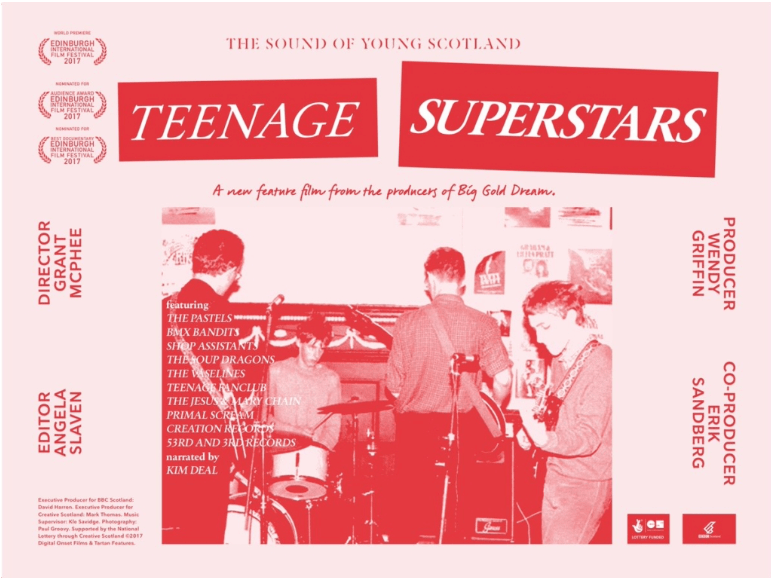
  • Teenage Superstars to screen on Sky Arts

    Very happy that Teenage Superstars will get its TV premiere on Sky Arts in early 2021. It’s been a long time coming but really delighted to have an outlet where the film will reach a much wider audience.

    We’ll have a Blu-Ray special edition later in 2020 along with some new pressings of the DVD.

  • Far From the Apple Tree DVD on Redemption

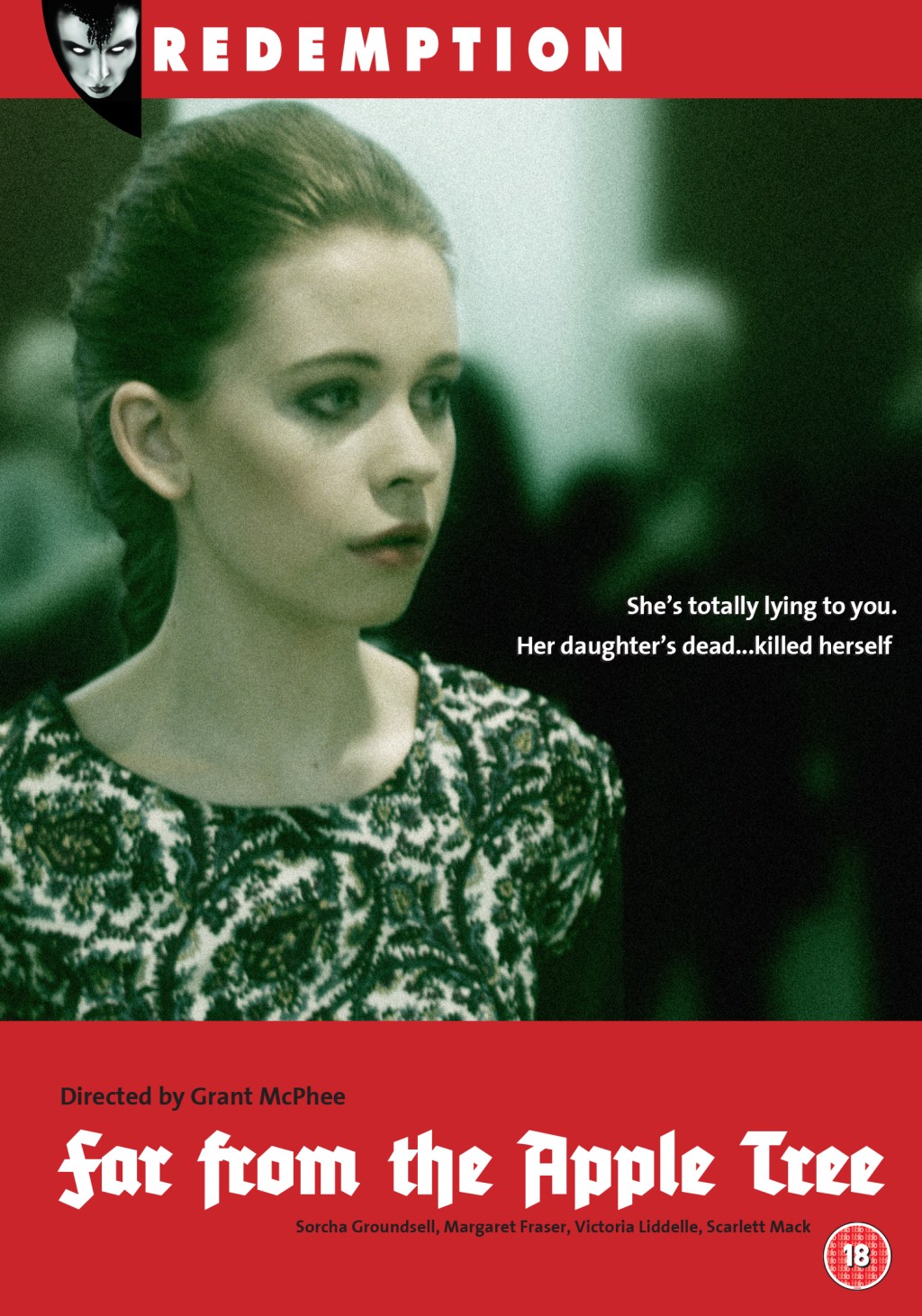
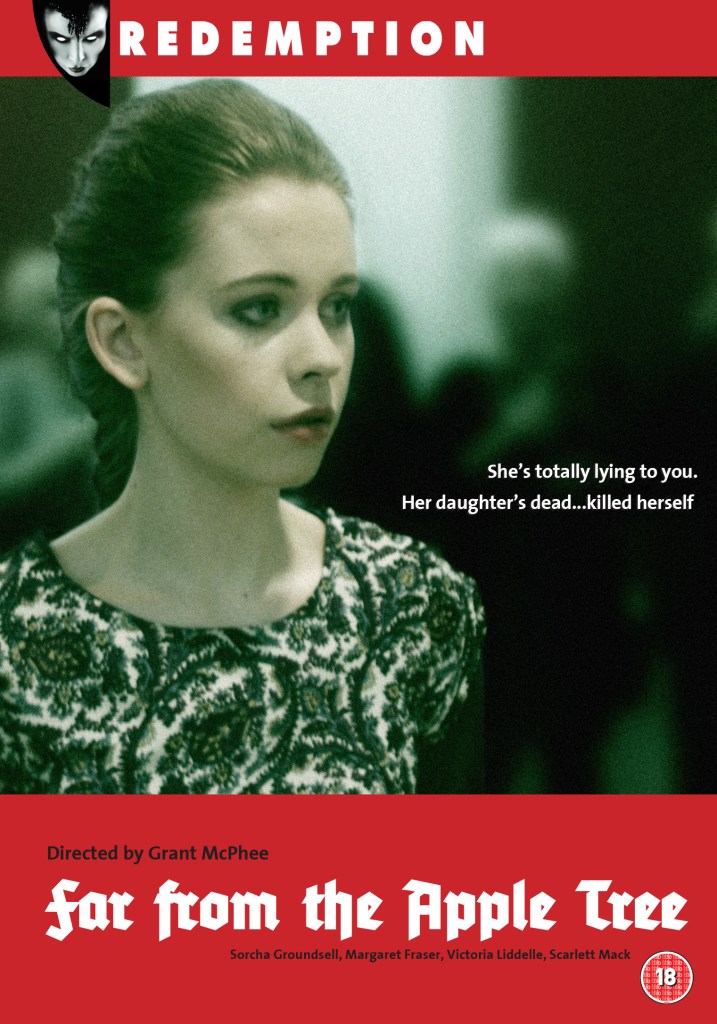
    We’ve got the artwork for the UK DVD standard edition and the special edition Blu-Ray. Here they are below.

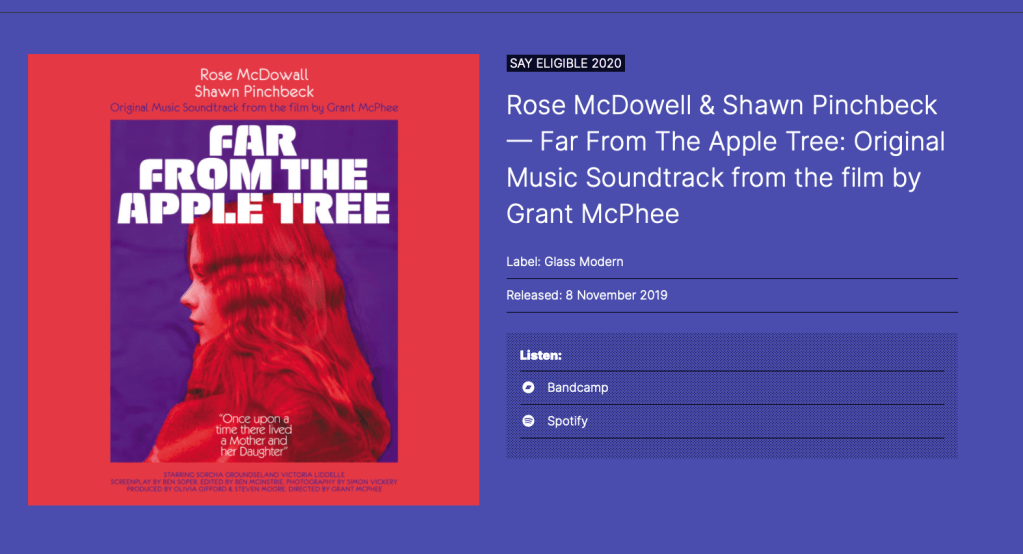
  • Delighted for Rose McDowall and Shawn Pinchbeck that their great soundtrack for Far From the Apple Tree, on Glass Modern is nominated for the SAY Scottish Album of the Year Awards.

    https://www.sayaward.com/album/76e9b582-c6b4-11ea-84ad-1298a0617e72

    This is what the website has to say about the award:

    Since its inauguration in 2012, The SAY Award has grown to become Scotland’s most popular and prestigious music prize. 

    Wielding a £20,000 prize for the winner, 9 runner-up prizes of £1,000 each and a design commission which highlights the enduring links between music, art and design in Scotland, The SAY Award is respected by artists, valued by the industry and is responsible for both a surge in musical discovery and an explosion of impassioned debate on social media. Placing artistic merit before sales history, genre or record label affiliation, The SAY Award dispenses with categorisation, opting instead for the creation of a bold, unifying platform from which Scotland’s most outstanding albums – across all genres – can be celebrated, discovered and championed.

    With previous Longlist titles featuring hip-hop, rock, alternative, traditional, folk, classical, dubstep, reggae, pop and jazz, The SAY Award accommodates Scottish music in all its influential, inspiring and idiosyncratic glory. From mainstream platinum sellers to self-released left-field debut records, The SAY Award has illuminated Scotland’s music scene with the ambition, credibility and commitment our artists’ endeavours so richly deserve.

    As we all try to navigate new challenges due to the Covid-19 pandemic, The SAY Award campaign will go digital in 2020. In line with Government guidelines and with audience and artists’ safety at the forefront, The SAY Award’s live events will move online this year, meaning music fans across the country will have the chance to be part of the traditionally exclusive final award ceremony. 

    All over the world, the music industry is striving to ascertain how to operate in this new normal, as the ramifications of the massive economic and  cultural impacts continue to be felt. The SAY Award is committed to providing Scottish artists and music fans with an inspiring campaign which embodies the passion and resolute nature of Scotland’s ever evolving music scene. 

    The albums celebrated by The SAY Award, spanning all genres and sounds, are the stories of Scotland’s people. At this time of crisis, when much of our culture is confined to our borders, it is more important than ever before to shine a light on the incredible talent Scotland has to offer. With international opportunities and visibility for Scottish music significantly limited at present, this year The SAY Award will feature Judges from four selected international territories for the first time in the award’s history; building upon and maintaining vital and valued international links for Scottish music. 

    It is without doubt that the past few months of lockdown have created significant challenges at all levels within the music industry, however, the resilience and determination of the musical community within Scotland has proven that music truly has no boundaries, as The SAY Award brings people together to celebrate the passion, value and diversity of Scottish music in 2020. 

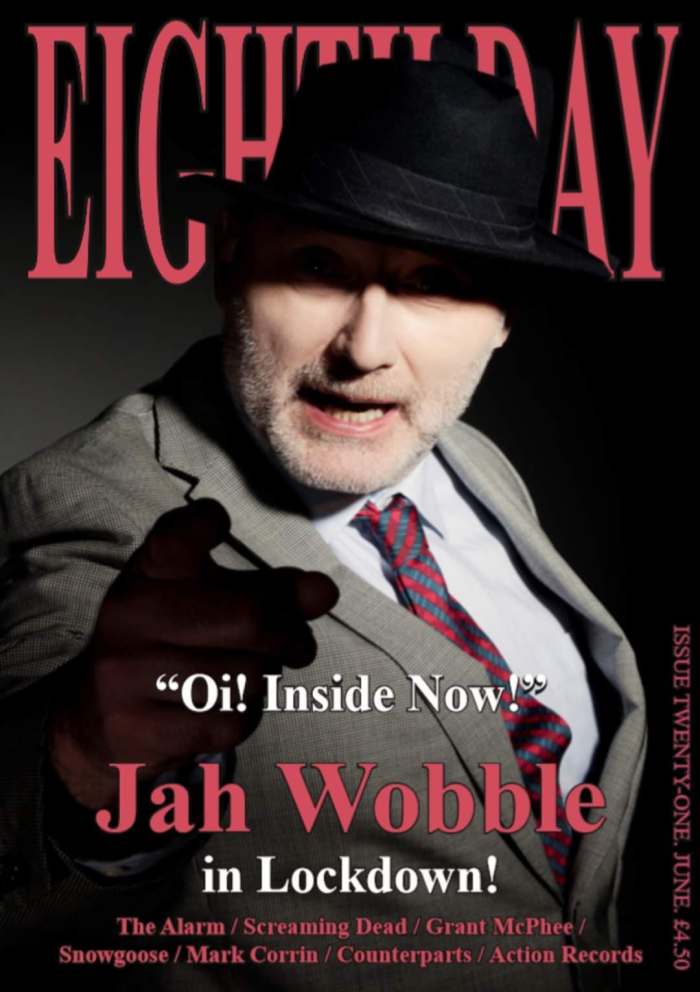
  • Interview – Eighth Day Magazine

    Thanks to Kevin Burke from Eight Day Magazine for this interview. You can purchase a copy of any of their issues here. It’s a great magazine – https://www.eighthdaycommunications.co.uk

    Growing up, were you one of those kids who listened to music all day and got lost in films at night?

    I got into music relatively late – maybe 15/16 but quickly devoured it.  My dad was a big film fan – not a fan of particularly good films – but we did watch a lot of films at home. Despite not having much money growing up my dad bought a video player in the very early 80s so we watched a lot of videos.  Unfortunately it was a V2000 player, an obscure European version of the Betamax that he thought was better somehow.  Regardless, due to its obscurity it didn’t have a great choice of films available for it so I ended up watching an un-curated mixture of an obscure 1960s dubbed Czech children’s films one night to be followed by things like Nightmares in a Damaged Brain the next.  Sometimes there would be something interesting that later sunk into my sub-consciousness but I could never join in on the school chats about having seen Raiders of the Lost Ark on VHS. When I was a little older – I was around 6 when I watched these – and started developing my own taste he did have the cheek to ask why I watched such strange films.  

    When I moved from home my film knowledge did start to develop.   I stayed next to a great video shop so my flatmate and I would rent up to 7 films day. The video shop was organised into categories like ‘important directors’ and actors from the history of world cinema so I got a pretty good film education quickly.

    As I said, I didn’t get into music until a little after my friends.  I grew up near Dundee which had (and still has) the greatest record shop in the UK – Grouchos. I managed to get a pretty decent music education from them, one which went a little further than my then current ‘indie’ record collection of stuff like Ned’s Atomic Dustbin and Carter USM.  I became obsessed with the 1960s – I’d obviously heard some 60s pop hits on the radio but could not believe there was an entire era of really great music to be discovered. I quickly got through The Beatles and Stones (still my favourites) and into Syd Barrett, Scott Walker and all these obscure psychedelic albums that seemed to find their way to Dundee.My friends were not really into this so I felt like I’d discovered some sort of secret. It wasn’t so easy to hunt down albums or discover new music then so would just go through old music encyclopaedias and look for interesting things and hope that hey could be ordered.   Obviously this wasn’t some big secret and I later learned that all the modern indie bands of the day had been inspired by this same music years before I’d found it. It was great as you’d start picking out names of inspirations from interviews which you had not really noticed before and it give me a light bulb moment of being able to see how the dots joined.  It was probably clear to everyone else but that realisation probably had a profound effect on me in terms of understanding how scenes and movements work which led to the later music documentaries. It just made you want to find out more. 

    Your musical tastes and influences seem rooted in your surroundings of Scotland, but who would you say has the most impact on you as a director? 

    I listen to a lot of Scottish music primarily because of my involvement with the films and I like to know what everyone is up to and to hear new local music. I think is important for anyone to listen to their own local music scene. Really though, I just tend to listen to something because it’s interesting or good regardless of where the musicians are from. Sometimes its nice to know a band is far away. I love the idea of punk, DIY and breaking down the barriers but I still love the magic you get from bands and music seeming otherworldly  and mysterious.  A lot has to be said for rock stardom still. I don’t mean selling lots of records but being a star.

    My thoughts on film stardom are the exact opposite and that’s probably from having direct experience with the whims of seeing how stars behave.  Film is more inaccessible to those from low income or working class backgrounds due to the higher costs involved and as a result there are whole parts of society not being properly represented.  I’m very much in favour of having less barriers, taking away the magic and opening up the process of filmmaking to more people. There’s unfortunately a lot of folk who benefit from inaccessibility and maintaining a status quo. Probably the people who’ve had most impact on me as a director are people like Ken Loach for his socialist outlook on filmmaking and others like Christopher Doyle who work in slightly more unconventional ways that often circumnavigate conventional rules but still create fantastic product.  Music probably has more impact on my views of producing a film – Spiral Scratch, Factory, Creation. Doing things for yourself, being self sufficient or working with like minded individuals who can create something good and successful but independently. I also started out working for a community video company in a very deprived area of Edinburgh where you would deal with direct social issues. They would pretty much just give you a camera and make you go out and film something that would have a direct impact on someone’s life. Being given that responsibility was very important to my confidence and ability to think quickly. I think it’s important to sometimes just jump in at the deep end.


    You have no formal training as such, and worked your way up, learning from experience and how others do it. Did that make it more difficult in the early days to get a project off the ground? 


    The Film Industry, in the UK anyway is almost 100% vocational.  Unless you go to the NFTS, and with no disrespect to the other fine teaching institutions, a film qualification is virtually worthless to getting you a job in the Film Industry.  Large film sets have their own unique language, systems and protocols which are generally not taught at film schools. The technical aspects are very simple and quick to pick up but it really is based on experience and slowly moving up a department ladder. Except for directors.  

    Ironically, the least experienced person on a film set (unless you are working on one of the new high end tv series or it is someone like Scorsese) is the director. A crew member can go from job to job and work on 4 or 5 features per year whereas a director may only work on one feature every five years.

    The industry is pretty regimented and in many ways very conservative for a so called creative industry.  Really, most of the difficulties I’ve had are with people believing directors have to be auteurs suffering for their art and can’t have a technical background. There’s a view in the film industry that you shouldn’t get above your station, ha.  Unless you ignore this and just go out and do your project then it can be a tough barrier.  Ion the plus side, there are many great folk who can help you. I know I would not have been able to have made anything without the help, support and advice from many great people I’ve met on the way.  A lot of film people are very, very generous with their time and knowledge and its something I always try and remember.

    The DIY mind-set is pretty much essential to me. All the projects I’ve made have started out from just deciding to go and make a film myself or with friends. Usually I have to take the initiative and take a finished film to a distributer, broadcaster or financier and hope they can do something with it. If not you just have to think of ways of releasing yourself. I suppose the difficulty with this approach is really fighting morale.  

    Is a difficult industry to succeed in, as much as the music industry is? 

    I suppose it comes down to what you’d define success as.  If it’s a steady income then that can be something almost anyone can be successful with  – it just takes a bit of a reality check and a lot of tenacity and hard work.  You can have a very good career working as a film technician providing you understand it wont happen overnight and will require dealing with A LOT of knock backs, disappointments and very long hours.  It really comes down to not giving up. It might not be what most peoples fantasy world idea of what success is like but there’s good solid work available in a very competitive market if you’re willing to put the dedication into it.

    On the other hand, if people have expectations of being an A list Hollywood director or having a top 10 album, that’s a level of success only open to the very few and requires –extreme luck, knowing the right people, playing the game, being able to talk the talk and having a large amount of talent.  It’s something I know I’ll never achieve but I’m happy doing what I do.

    I define success as being happy doing what you do, which I very much am.  I have to work like everyone else and I might not like my job everyday. It might not be someone else’s idea of a success but I think anyone who lasts a few years in the film industry is successfull I know my limitations and I’m comfortable with that.

    When you begin a project are you within a creative bubble for the length of the production, and it becomes hard to switch off? 

    No, the exact opposite. For practical reasons I need to support what I do by working on other peoples films.  I’m quite lucky as I have quite a long background in cinematography and being a camera technician which allows me to work on some very good projects.  

    To keep my own films going I generally have to work  80 hours a week on these other projects, which doesn’t allow me too much time for my own. I take what I can get. I took 2 weeks during a break to make Far From the Apple Tree.  Teenage Superstars was being cut at the same time so I had to review cuts and make notes in the very late evenings, Big Gold Dream was being released at the same time so I had to work on the press for it during what breaks I could manage

    It was a pretty intense period without enough time to rest afterwards as I had to go back to the brutal hours of my camera work.  I’m a very clean living person and at some points on FFTAT I started to develop these crazy nosebleeds whenever I bent down.  I think it was the stress but I’m sure I looked like I was an extra in Scarface.   I don’t think you even get a chance to switch off during the intense filming period.  Everything is just grabbed moments here and there. But I suppose it does become hard to switch off when you finish. I do a lot of exercise and try and spend quality time with my family. Holidays are important as you can overwork yourself without realising it when caught in that bubble. I remember at the end of one film my internal dialogue seemed to switch itself off for a few hours. It was pretty nice actually but knew it probably meant it was time to stop.  You do have to really look after yourself – physical and mental health so I always make sure that I have a good holiday with my family and try and eat well. 


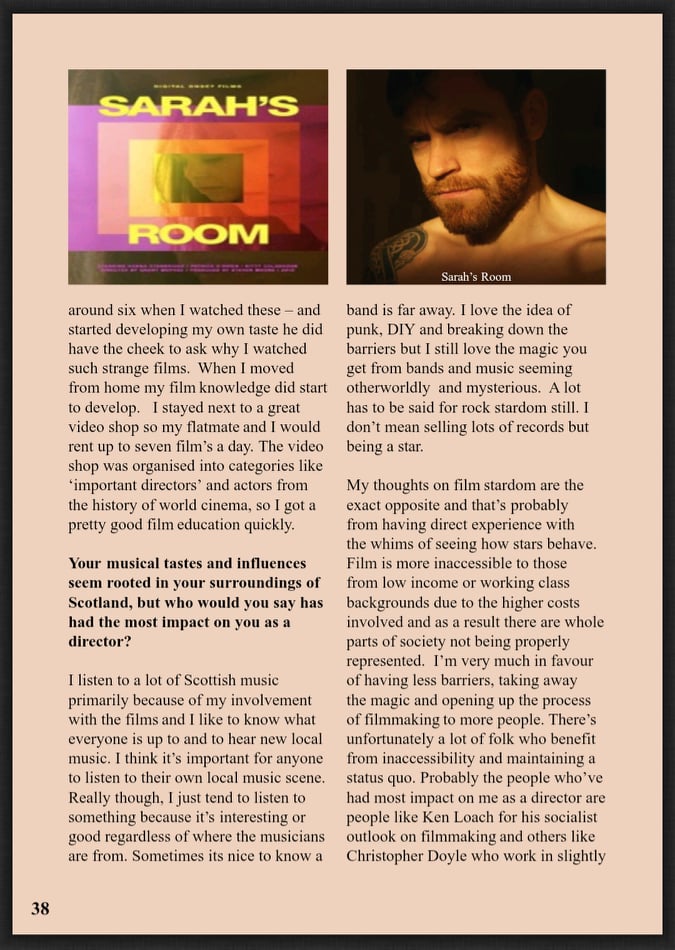
    Your debut feature is the noir-horror style Sarah’s Room. Is it true you managed to make this 85 minute film that won awards (Fife Film Expo, Bootleg Film Festival New York), for only four thousand pounds? 


    It was really an experiment.  About ¾ of that budget went towards crew fees so it was probably closer to £1000 to make the film. We worked out what was needed to pay crew and then what we could do with the rest . I try to stay away from revealing budgets and time-frames as usually it is seen as an excuse. The only reason we mentioned it for Sarah’s Room was the hope that it might inspire others to try something similar – and hopefully something better.  We did it in 5 days after constructing a tight schedule.

    It probably wasn’t the wisest choice for a first mission statement to be fair. It just frustrated people as it was incredibly ambiguous and more damning, didn’t fit into a set genre. People who expected a horror got bored and annoyed, and people who expected an arthouse drama got bored and annoyed as it had too many genre elements to it. 

    I just don’t see the point of making something that has been done before. I’d rather fail terribly. We could have made some sort of tightly scripted horror but it would just be like all those other micro budget indie films.  I’d rather use the budget limitations to do something you’re not allowed to with funding rather than try and make something that’s an attempt to appeal to funders. It might not be good but it’s different.  t’s almost it’s own genre – though admittedly one that wont catch on.

    It got some OK reviews among the general un-interest– someone said it was the sort of film that you can take magic mushrooms too and it will reveal the mysterious of the universe.  Someone else said it was ‘just a boring man with a beard who just walks around all day.’

    The camera and lighting style worked really well and a lot of indie films made in Edinburgh after looked very similar to it for a little while after. Nobody employed me as a director after it but I did get a lot of calls to work as a cinematographer  They just asked me to make their film look like mine and I didn’t really see the point in that. 

    Overall it was a film that gained very little interest and I can see why.

    I probably should have learned from this but made another film shortly after that went a little more extreme in annoying an audience. It got some pretty extreme reviews.  Someone said that even though it was only January they knew they’d seen the worst film of the year. But it did get some really good reviews. Annoyingly some of the best I’ve had as I think it’s my worst film. 


    It’s going to be included in the Far From the Apple Tree BluRay.


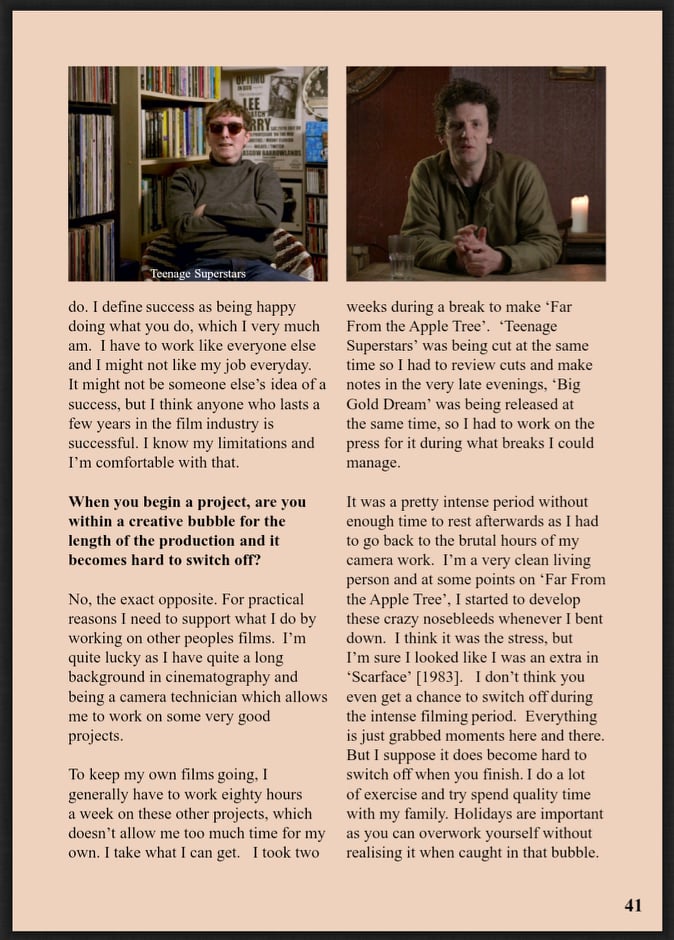
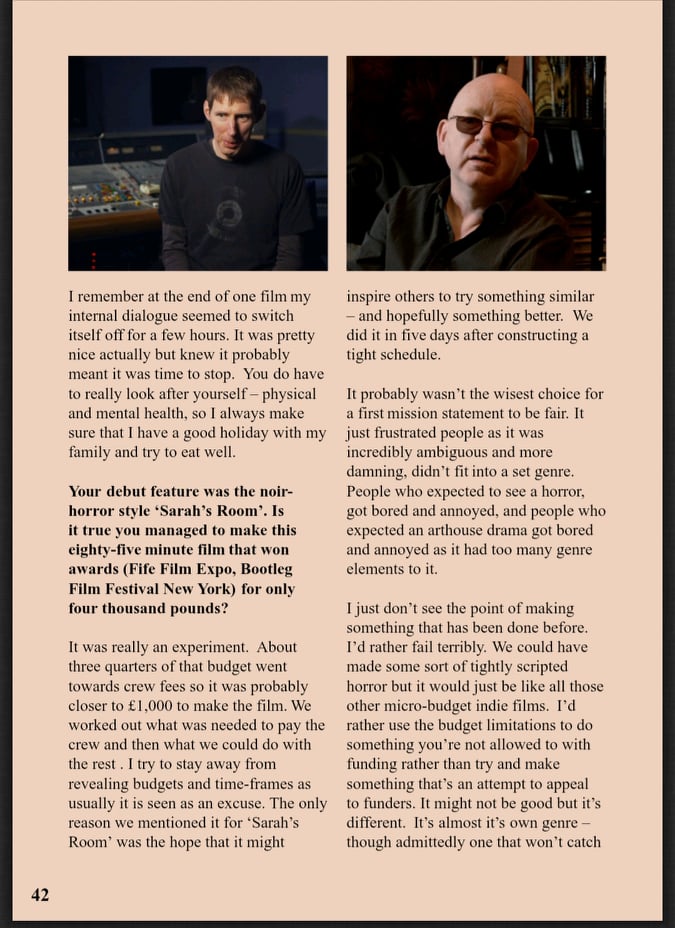
    Teenage Superstars is both a passionate and enlightening work, did you feel that it was a story that needed to be told, as the impact of Scottish music on the global scene is often forgotten? 


    Thank you.  I’m very passionate that these stories had to be told.  Obviously parts of it have already been written about and over the years and there have been various documentaries but I don’t think it had been told in this way before and I don’t think anyone had gone into the same depth. 

     Zoe Howe had written the fantastic Barbed Wire Kisses and Allan Campbell had made the Bellshill Beat program around 25 years earlier but I don’t believe there was a chronological account that joined all the dots or focussed so heavily on the friendships which are so important to the scene.

    Big Gold Dream and Teenage Superstars were both intended as feature films despite the ‘talking heads’ approach and we wanted each to have their own different approach to telling a story about music that is not just about music.  They’re not musical encyclopaedias, they are stories with characters who have their own stories.   There’s still a lot to be told and I hope someone else does it.

    Every city or area should have their own stories told. It’s important to a culture and it’s important for new generations to be inspired by the previous one, and importantly to add something to that.


    Did Teenage Superstars start out as smaller projects looking at a small section of the overall picture and it simply grew in enormity? 


    It always grows.  And grows and grows.  Teenage Superstars and Big Gold Dream were two films called The Sound of Young Scotland. Initially it was one film – about Postcard Records which then became about Postcard and Fast which then started to include the Glasgow bands from the 80s and 90s.  The characters and stories were so good that we decided it should be two films.

    Unlike the drama features I do these films are unfortunately very expensive to make with very little chance of recovering the budget so it does have to be a passion project.  There’s just so many stories from such a small part of the world that I hope someone mines all the great ones not yet told.


    How did Kim Deal become involved in the project? 

    Much like everything else to do with the films we just asked her! ‘hey pal, do you want to be in our fillum?”    Our Executive Producer, Mark let us do whatever we wanted – which was fantastic – but he did ask ‘do you think you could squeeze the Pixies in somehow?’.  

    Like Robert Forster narrating Big Gold Dream we wanted somebody who had a connection with our story as well as being part of another story.

    There’s a strong connection as The Pixies covered Head On by Jesus and Mary Chain and The Breeders supported Nirvana with Teenage Fanclub..  One of The Breeders albums was recorded in Edinburgh so she really knew the culture, the story, the people and was the perfect choice.  It was also great to have a female voice.  Many things happened like this during the production, a seemingly off-the-cuff suggestion from someone often led to ‘actually, that’s a really great idea’.   She was brilliant and incredibly kind to us.

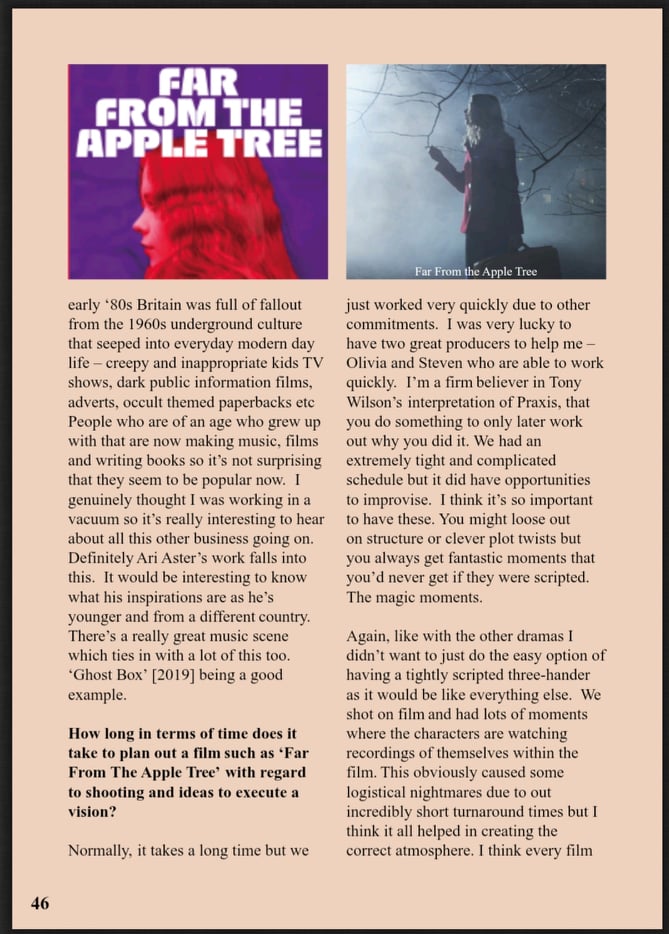
    Far From The Apple Tree is a modern, horror masterpiece. Was it the darkness and possibilities that attracted you to the screenplay by Ben Soper? 

    Haha it’s  a little far of that. I asked Ben if he could write a script for it. Ben is a great writer, something I struggle with. Me, being a writer not me struggling with Ben being a great writer.  I needed a script and Ben and I have a shared love of similar films so I knew he’d be great. It was written very quickly and went into production very quickly afterwards. Just a few weeks.  

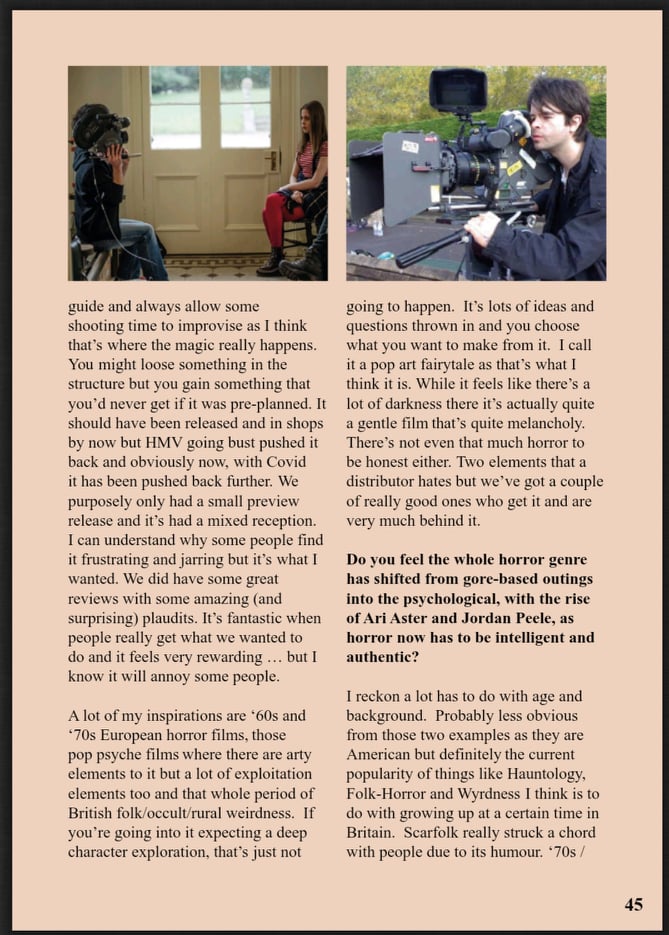
    I like to have something solid as a guide and always allow some shooting time to improvise as I think that’s where the magic really happens. You might loose something in the structure but you gain something that you’d never get if it was pre-planned.

    It should have been released and in shops by now but HMV going bust pushed it back and obviously now, with Covid it has been pushed back further.  

    We purposely only had a small preview release and it’s had a mixed reception. I can understand why some people find it frustrating and jarring but it’s what I wanted. We did have some great reviews with some amazing (and surprising) plaudits. Its fantastic when people really get what we wanted to do and feels very rewarding… but I know it will annoy some people.

    A lot of my inspirations are 60s and 70s European horror films, those pop psyche films where there are arty elements to it but a lot of exploitation elements too and that whole period of British folk/occult/rural weirdness.  If you’re going into it expecting a deep character exploration that’s just not going to happen.  It’s lots of ideas and questions thrown in and you chose what you want to make from it.  I call it a Pop-Art Fairy-tale as that’s what I think it is.

    While it feels like there’s a lot of darkness there it’s actually quite a gentle film that’s quite melancholy.  There’s not even that much horror to be honest either. Two elements that a distributor hates but we’ve got a couple of really good ones who get it and are very much behind it.


    Do you feel the whole horror genre has shifted from gore-based outings into the psychological, with the rise of Ari Aster and Jordan Peele, as horror now has to be intelligent and authentic? 


    I reckon a lot has to do with age and background.  Probably less obvious from those two examples as they are American but definitely the current popularity of things like Hauntology, Folk-Horror and Wyrdness I think is to do with growing up at a certain time in Britain.  Scarfolk really struck a chord with people due to its humour. 70s/early 80s Britain was full of fallout from the 1960s underground culture that seeped into everyday modern day life – creepy and inappropriate kids TV shows, dark public information films, adverts, occult themed paperbacks etc  People who are of an age who grew up with that are now making music, films and writing books so it’s not surprising that they seem to be popular now.  I genuinely thought I was working in a vacuum so it’s really interesting to hear about all this other business going on.

    Definitely Ari Aster’s work falls into this.  It would be interesting to know what his inspirations are as he’s younger and from a different country.

    There’s a really great music scene which ties in with a lot of this too. Ghost Box being a good example.


    How long in terms of time does it take to plan out a film such as Far From The Apple Tree with regard to shooting and ideas to execute a vision? 


    Normally it takes along time but we just worked very quickly due to other commitments.  I was very lucky to have two great producers to help me – Olivia and Steven who are able to work quickly.  

    I’m a firm believer in Tony Wilson’s interpretation of Praxis, that you do something to only later work out why you did it.

    We had an extremely tight and complicated schedule but it did have opportunities to improvise.  I think it’s so important to have these. You might loose out on structure or clever plot twists but you always get fantastic moments that you’d never get if they were scripted. The magic moments.

    Again, like with the other dramas I didn’t want to just do the easy option of having a tightly scripted 3-hander as it would be like everything else.  We shot on film and had lots of moments where the characters are watching recordings of themselves within the film. This obviously caused some logistical nightmares due to out incredibly short turnaround times but I think it all helped in creating the correct atmosphere. I think every film should be treated as an art project within itself – the actual filming – and out of that comes the film.  Getting the right people on board is essential as you have to rely on other peoples experience so much. Due to our limited resources we can’t work like a normal shoot which is something some people find difficult to adjust to. Having all these elements together and a vision is as important as having a great script I think.  


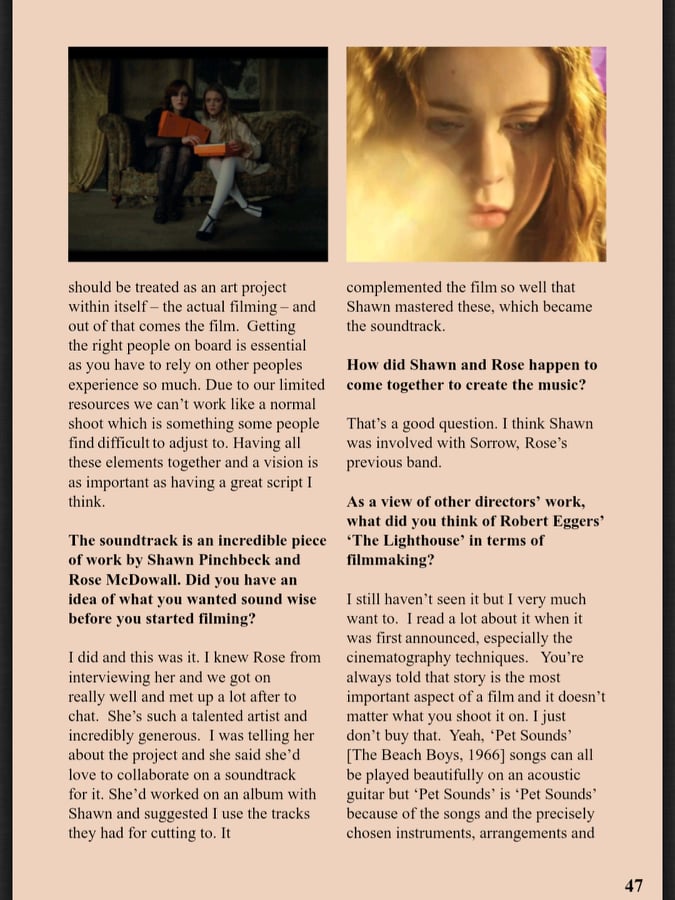
    The soundtrack is an incredible piece of work by Shawn Pinchbeck and Rose McDowall. Did you have an idea of what you wanted sound wise before you started filming?


    I did and this was it.  I knew Rose from interviewing her and we got on really well and met up a lot after to chat.  She’s such a talented artist and incredibly generous.  I was telling her about the project and she said she’d love to collaborate on a soundtrack for it.  She’d worked on an album with Shawn and suggested I use the tracks they had for cutting to.  It complemented the film so well that Shawn mastered these, which became the soundtrack. 


    How did Shawn and Rose happen to come together to create the music? 

    That’s a good question. I think Shawn was involved with Sorrow, Rose’s prevous band.


    As a view of other directors’ work-What did you think of Robert Eggers The Lighthouse in terms of filmmaking? 


    I still haven’t seen it but I very much want to.  I read a lot about it when it was first announced, especially the cinematography techniques.   You’re always told that story is the most important aspect of a film and it doesn’t matter what you shoot it on. I just don’t buy that.  Yeh, Pet Sounds songs can all be played beautifully on an acoustic guitar but Pet Sounds is Pet Sounds because of the songs and the precisely chosen instruments, arrangements and recording techniques.  

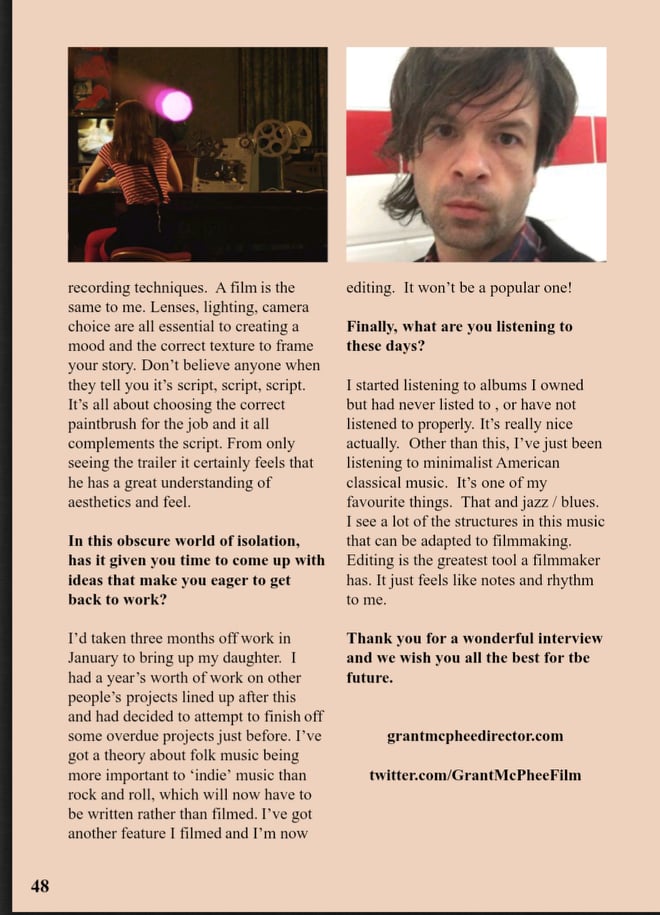
    A film is the same to me. Lenses, lighting, camera choice are all essential to creating a mood and the correct texture to frame your story. Don’t believe anyone when they tell you it’s script, script, script.

    It’s all about choosing the correct paintbrush for the job and it all complements the script. 

    From only seeing the trailer it certainly feels that the has a great understanding of aesthetics and feel.


    In this obscure world of isolation has it given you time to come up with ideas that make you eager to get back to work? 


    I’d taken 3 months off work in January to bring up my daughter.  I had a years worth of work on other people projects lined up after this and had decided to attempt to finish off some overdue projects just before.  

    I’ve got a theory about folk music being more important to ‘indie’ music than Rock and Roll, which will now have to be written rather than filmed.  

    I’ve got another feature I filmed and I’m now editing.  It won’t be a popular one!

    Finally, what are you listening to these days? 

    I started listening to albums I owned but had never listed to , or have not listened to properly. 
    It’s really nice actually.  Other than this I’ve just been listening to minimalist American classical music.  It’s one of my favourite things.  That and Jazz/Blues.  I see a lot of the structures in this music that can be adapted to filmmaking.  Editing is the greatest tool a filmmaker has. It just feels like notes and rhythm to me.

  • Obviously there’s a WHOLE lot more to this than this interesting article by Erik Sandberg for Bella Caledonia. All I can say at the moment is ‘it’s very interesting so watch this space’

    You can view the original article (c) Erik Sandberg/Bella Caledonia here – https://bellacaledonia.org.uk/2020/05/10/we-rule-the-school/

    The first time I ever met Stuart Murdoch, he gave me into trouble for swearing at the church hall. Several groups were playing that night – mainly pupils from the local secondary school. Stuart had come down to see what all the racket was about – kindly asking folk to pack up and clear out as they’d gone over their time. This was during the late ‘90s. Years later, I got to know him a little better and he would attend shows, my club nights. He worked with a band on my record label, producing one of their songs, and I think I asked him to narrate a film, too, but by then he’d already snapped me up for his own flick.

    When Belle & Sebastian played a concert at an old beer factory in Stockholm a couple of years ago, I went along and there he was on stage, projecting pictures of the Stockholm tunnelbana to an animated audience from his afternoon amble. I think at one point he got onto his holiday pics. The crowd loved it. Proper Belles gig. It’s that kind of irreverence that really makes Scots quite unique.

    Upon moving to Stockholm in 2017, I sort of abandoned my previous life in Glasgow. I was proud of what I achieved, but I really wanted to learn my Father’s language, fatten my CV and hopefully learn new skills. The very last thing I worked on before I left was a film called Teenage Superstarswhich – along with a couple of other films – were sort of my way of saying thanks to writers and musicians like Stuart, who had profoundly inspired me over the years.

    Teenage Superstars is a film that chronicles the rise of some of the most important Scottish groups of, like… ever. Directed by Grant McPhee, it’s an essential feature length documentary that every, and any Scottish pop obsessive must see. It premiered at the Edinburgh International Film Festival June 2017, the month I moved to Sweden, so – sadly – I missed its first ever screening. I do remember all the BBC credits on the promotional material for the premiere and thinking: ‘Ah, well, I guess it’ll be on the box soon and the whole country will get to see it.’ That made me happy and I sort of forgot about it. Job done.

    A few weeks ago I started watching another bunch of things around Scottish music, a series entitled Rip it Up. I remember all the talk around it at the time, late in 2018 I think it was, the exhibition et cetera, but – given my geography then and as it still exists now – I hadn’t access to regional BBC programming, nor do I use VPNs.

    I don’t know the people that made the Rip it Up series, who commissioned it or anything like that. I don’t particularly care, either. What I will make clear is that the similarities with the episode entitled Unwrapped: The Glasgow Indie Scene of Rip it Up and my co–produce, Teenage Superstars, are quite startling. It’s simply a matter of principle to me that these comparisons are checked here, yet also a desire that Teenage Superstars’ broadcast is realised. It’s the least Scotland’s peoples deserve.

    So, how are Unwrapped and Teenage Superstars similar, and why wasn’t it broadcast on BBC Scotland as was originally planned? Well, the simple answer for the latter is I don’t know. I can’t answer for BBC Scotland executives because I do not engage with them. I do know that an early edit/cut of Teenage Superstars was circulated with executive producers et al. One wonders, now, the travels it undertook.

    Unwrapped starts innocently enough with some spiel about Wet Wet Wet not being the only the greatest Scottish group of all time. Problems begin at just over a minute when a track by The Pastels, Comin’ Through is played through the background, in Teenage Superstars the same track was also commissioned. Four minutes into Unwrappedwe pan to Bellshill where, like in Teenage Superstars, themes of friendship are explored and we see an image of the sign for Bellshill train station, shot from the same angle as it was in Teenage Superstars, then footage of the same local park in Bellshill.

    As Unwrapped starts to get going, I begin to notice that the same cast has also been used – Alan McGee; Duglas T Stewart; Eugene Kelly; Frances McKee; Sean Dickson; and Stephen Pastel all make contributions. Then, at about 6 and ½ minutes, things start to get seriously weird. A random cat – sitting outside a house in Bellshill with Duglas T Stewart talking appears – and it is the exact same cat that appears, also, in Teenage Superstars (53 minutes in) which was shot by Grant McPhee. Uncanny.

    8 minutes in and, referencing Sean Dickson and Duglas T Stewart, the narrator says, “this happy band of musical pals would soon produce a group that would serve as a finishing school for the boys from Bellshill, BMX Bandits.” The same archive clip, as appears in Teenage Superstars, plays of the band performing their track Her Hair, with a close-up of Duglas T Stewart holding a doll with blue hair.

    Around halfway into Teenage Superstars, I seem to remember Frances McKee describing the formation of The Vaselines, while an archive clip shows Eugene grasping a bunch of grapes with Frances at the other side of the room clinging to a tambourine. Son of a Gun by The Vaselines was synched into the background. Frances and Eugene describe their musical skills and sound, then the narrator says, “Steven took The Vaselines under his wing and they began to gig regularly with The Pastels.” In Unwrapped, just over 13 minutes in, Frances describes the formation of The Vaselines, while the same archive clip (like in Teenage Superstars) shows Eugene Kelly with a bunch of grapes with Frances McKee opposite holding a tambourine. Son of a Gun by The Vaselines is also used.

    There are many, many more similarities, a long list of them – too many to mention. The most galling aspect is the identical music/soundtracking that has been used: both Unwrapped: The Glasgow Indie Scene episode of Rip it Up and Teenage Superstars feature the same tracks by The Shop Assistants, The Pastels, Teenage Fanclub, The Vaselines, The Soup Dragons and the BMX Bandits. It takes a long time for filmmakers to secure rights for songs, there are all sorts of things to clear like copyright, publishing and sound recording rights that need to be honoured and people need paid, too. In some cases, a music consultant needs to be hired in order to secure these licensing rights, this also costs dough. A lot. Furthermore, it involves endeavour, research, bundles of tenacity. Given Teenage Superstars is a feature length music documentary, this part of the production was the most stressful for the team. The songs are the story, songs are stories/narratives in their own right. That’s why we made our documentary — we just loved the songs. We wanted to hear about the stories behind the people that penned them.

    It’s just so bloody odd that out of all the amazing tracks by the bands involved there are almost infinite numbers of combinations to use, but they use mostly the same songs – and they are not even the bands’ most famous ones – as with the archive, too.

    At the very least there should be an acknowledgement from BBC Scotland that someone has taken their eye off the ball here, someone has made a little mistake. I’m a massive believer in the freedom of everyone to tell their story — what it means personally: us as individuals, together as independent entities within our communities. It’s important because music means different things to all of us. Filmmaking has infinite possibilities to document certain periods in music, but the BBC have seemingly used what it means to us and not them — our methods for constructing personal stories, the techniques, the story arc, the tone instead of what it means to them. That defeats the whole point.

    In any case, mistakes happen — we’re all human! Its political programming and editors aside, the BBC is still a great brand.

    But, please — as Stuart once mused: do something pretty while you can.

  • Interview with Into Creative about Filmmaking in Scotland.

    Had a great time speaking to John Welsh at Into Creatives about filmmaking in Scotland, Teenage Superstars, Big Gold Dream and music. You can visit the original interview (and their fab site here) . (c) Into Creative/John Welsh – https://intocreative.co.uk/into-scottish-creatives-grant-mcphee/

    Over at Intro Creative towers we’ve been beavering away in recent months and from a general discussion in a well known pub in the west end of Glasgow, we came up with an idea. An idea to showcase the best of Scottish creative culture.

    We have plans to bring you updates, interviews, reviews and discussions with the cream of Scottish talent over the coming months.

    But where to start? Well, there really was only one choice for that, Grant McPhee, the man behind the wonderful music documentaries that pinpoint the sound of young Scotland’s music from the punk scene in the 70s through to the creative explosion of post-punk bands that emerged in the 80s and 90s.

    Grant is one of Scotland’s foremost film directors and has worked with such luminaries as Ken Loach, Danny Boyle and Steven Soderbergh.

    Teenage Superstars, which Grant directed, is free to air this weekend which we highlighted in our article here and also led to the 5 CD box set release, ‘Big Gold Dreams’ – A Story Of Scottish Independent Music 1977-1989, which was reviewed here.

    We very much hope you enjoy the article and we are indebted to Grant for taking the time out for the interview. Enjoy!

    John Welsh
    @welshjb

    INTERVIEW

    You directed and produced the music documentaries Big Gold Dream (2015) and Teenage Superstars (2017). Can you tell us a little bit about how you became involved in these projects, what your hopes were at the start and do you feel you accomplished what you set out to do?

    Big Gold Dream started life in around 2005/6. I’d watched a film the previous year called Made in Sheffield about their indie/post-punk scene. I’ve always been a big believer in the significance of the DIY mindset and attitude on our culture. Britain has always had issues relating to authority – often to do with its class system – where people are taught to believe they can/can’t or are allowed/not allowed to do something. It doesn’t really exist to the same level anywhere else and when those ‘rules of society’ are challenged really interesting things start to happen. As the cliché goes, ‘after punk happened’ our society changed with very far reaching cultural significance. I’d always been aware that Postcard Records in Glasgow was important in the story of independent music but at that time, outside of Glasgow this seemed to have been largely forgotten. That’s quite ironic as it was such an important influence on Creation which mostly birthed BritPop – and that had resulted in this underground music becoming incredibly successful and lucrative. I thought there was an injustice and a hugely important part of Scotland’s culture that needed to be documented. I’d been working with Mani from Win who one day randomly asked me what I’d make if I could make a documentary, so with Made in Sheffield in mind I just said I’d like to make a documentary on Postcard Records.

    It really was an off-the-cuff question with an off-the-cuff answer which I expected to end there. Instead, Mani said ‘ Great, I know Malcolm and proceeded to phone him’. It was Malcolm Ross.

    I’m quite reserved by nature and certainly then had the ‘I can’t possibly do that as I’m not allowed to’ attitude. Mani’s drive and enthusiasm was so infectious that I ended up meeting up with Malcolm the next day, who became a fantastic supporter and opened up many doors. My expectations were again challenged when much of our time was spent talking about the Edinburgh bands from that period rather than just Postcard. I’d been aware of Fast Product via Joy Division on Earcom 2 but was stunned to learn it was an Edinburgh record label. And that was the start I was told about so many bands I’d never heard about before. Shortly after, the Postcard OJ singles were compiled and released on The Glasgow School and Orange Juice were beginning to be re-appraised. It seemed a fantastic and perfect time to make a film about these bands . That’s how the films started though they had a fairly bumpy crisis-crisis road however before release.

    My hopes for them were pretty humble. Probably at best a DVD for those involved and then put on YouTube. I was aware of the need to licence music and archive which resulted in the film being very detailed and talk heavy – mainly because we had no money – so there was no intention of festivals and beyond. The lack of money became a big issue. I’d tried to pay those involved but I really wasn’t earning enough so the film just fizzled out with only very sporadic attempts to finish it over the next few years.

    By 2013 my day job in the feature film industry camera department had become more successful. I’d never been able to get rid of the itch this film was giving me. It really felt like a duty so from a vantagepoint of being slightly more mature and with a slightly better income I decided to give it another go. Having Erik Sandberg and Innes Reekie on board gave the project a completely fresh and new energy which was desperately needed, and later, with Angela Slaven and Wendy we managed to finish not just one film but two.

    I’m still not sure how we managed it. Along with sound recordists Dougie Fairgrieve and Paul Hartmann; Martin Parry and Garry Torrence on camera and fitting around my 80-hour a week day job we somehow crammed 100s of hours of interview across the UK into that very short time frame. It was probably only manageable down to the enthusiasm of the interviewees and more so, the inspiring stories they told. To be honest, I think the making of the film became symbiotic with the subject matter and I subconsciously projected questions and answers as a means of coping and completing the film with some semblance of sanity left. Everyone needs something to keep them going, for me it’s stories about Factory Records, Zoo and Fast Product. If I’m feeling I need some motivation I’ll stick on something like Blue Boy and that’s enough to keep me carrying on.

    There really was never any plan for either film so I can’t say if they succeeded or failed. Of course, I was completely stunned by what they went on to achieve. Other than the fantastic music and personalities within, I think the lack of a plan is a reason why they became (relatively speaking) successful and people picked up on them. They don’t patronize you. They were never, ever intended to be about making money (luckily) and they were never intended as a light introduction to Scottish Independent music. They were made by people who like music for people who like music and they go straight into the good and obscure from the off. There was no commercial intent, only ‘are they an interesting character?, did they make interesting music? and are they part of the story we want to tell? It was irrelevant if they sold just 20 records, or had even made a record.

    It wasn’t about including household celebrities or limiting music to help with profits, it was about telling a story with the very limited means we had and relying on primary sources as much as we could. The only reason why we don’t have some tracks or archive is they were not available to us. We wanted to make a point of it not feeling like one of those Beatles documentaries which don’t feature The Beatles or their music, which actually would have been a better business move. We made huge, huge losses, thousands and thousands.

    When we were aware it was selected for the Edinburgh Festival I just made the choice to grasp it and worry about the tens of thousands of pounds it would cost later. The screening was quite special with some fantastic audience interaction – a bit like a really drunken Christmas panto. There was even a stage invasion!

    I suppose with this in mind we did achieve what could be seen as setting out to do something and make a film that did not compromise. It screened at at nearly all of the UK’s major film festivals later, was released on DVD and appeared on TV. It was pretty amazing to see Boots for Dancing and hear Singing in the Showers on BBC2.

    The music was always there but we hoped that along with great online resources as Mike O’Connor’s Scottish Post-Punk music it has helped bring some of the more obscure bands to those who’d been unaware or had forgotten.

    Post-Punk has continually been re-evaluated over the years – with much of the thanks to Simon Reynolds – and it still is, and our film is just a part of this continual re-evaluation. The press generated and the fantastic online support we received has part-led to, symbiotically with technology my much hoped for partial spotlight from the mainstream powers on how significant this music was for Scotland culturally. While many of the bands never received mainstream success those they inspired have done – and not just in Scotland. It goes far beyond. The Scottish Post-Punk pages have more fans from outside of Scotland than in and I get emails from folk across the world asking about the films.

    I still maintain that the music – and the reasons why the music was created in this timeframe, has great importance that has not been fully tapped into and properly analysed by the cultural elite. It’s not enough for the Culture Secretary to say they enjoyed the film. They need to be listening to what the people in the film are actually saying and why. I wanted to put a mirror in front of audiences so they could say ‘these people are just like me’ and go out and form a band, or be creative in another way. Our society still rarely works on the principle of positive encouragement and it should do. It’s a fantastic feeling to get an email from a teenage girl who see’s the film as a blueprint for her own non-music art. It’s not the film but the message those in the film have that is important.

    There wasn’t a plan for the film back in 2005 but there was a hope that a lot more of this music and culture would be documented. Due to resources, time and film running-time we could only achieve a very small part and I was hopeful that after showing there was a real audience, the larger powers-that-be would unearth a wealth of cultural riches but this sadly did not happen to any great extent. After the BGD premiere we were approached by the National Museum as they were interested in basing an exhibition around the films subject. I was part of the initial steering committee but the scope widened to be much more general. They did a fantastic job but it was such a shame that the huge audience generated could not appreciate some of the smaller details that make up the greater whole, and often a more interesting one. The DIY stories of some of the less well known BGD characters are some of the ones which often resonate and inspire audiences most. It was even more of a shame when the BBC stepped in with their television take on it. Despite the vast resources available and a once in a generation opportunity they treated their audience with contempt and little understanding of the people who make music. The best episodes were just a lighter retelling of what we’d already told. It felt lazy and uninspired which is the exact opposite of what it should be and the public and society as a whole lose. We’re small and can’t do more but there are people who can and should.

    Scotland’s independent music scene is ever changing and evolving. There are vast amounts of untold stories – historic, modern and those which have not yet even happened which need to be told. Even those whose stories are currently being written need to have them documented. We can learn so much from history which will later enrich us and it is simple to see that even a band knowing they have been played on the radio (thanks Vic Galloway for being one of the good guys) is enough to give them the encouragement needed to keep on going and evolving. Someone at home hearing a new and small band on the radio and especially seeing one on TV can be just enough for them to be inspired to go off and do something interesting themselves. This is how scenes, culture and history are created. And great music and art.

    Scotland’s culture department and large media organisations have to take make their contribution and it shouldn’t be left up to the independents to do so. There are some fantastic cultural musical archives about to be released or completed – Chris Brickley’s 16 years book and Carla Easton’s film on females in music. All of these should have been publicly funded and not fought for. It’s not always about what is big or sells, the small parts of our heritage are often the most rewarding for us and future generations.

    How did you get “buy-in” from the various bands, artists and those involved in the industry when you started out?

    As I’d mentioned, Mani and Malcolm Ross were the starting point. I’ve been incredibly lucky on this journey and met some of the most amazing and encouraging people I could have encountered. I think I’ve mentioned elsewhere that there’s a very important difference between the film industry and the music industry.

    The film industry want to see CV’s, evidence and so on whereas the musicians just seemed to go ‘OK, lets give it a go’. Perhaps that’s why Scotland has a much more interesting music than film industry. From my experience in the film industry I’d been used to working with some fairly well known actors as a crew member so was never daunted in anyway with the musicians as it was already something I was used to. I think that some people were intrigued by receiving a random email or message asking if they wanted to be in a film rather than a more conventional approach. It’s a big ask and a big responsibility to represent someone’s life onscreen , especially when – as often happens within bands – their experience may have ended acrimoniously. We always were incredibly respectful about presenting everyone well and any vaguely controversial topic was discussed in length with Angela, our fantastic editor.

    There are so many people who have helped get these films made that it would be an incredibly long list. I’m always wary of forgetting people (so apologies if I do) but obviously Innes and Erik were crucial in engaging with the Edinburgh and Glasgow folk, respectfully. Duglas Stewart, Kle Savidge, Francis MacDonald, Douglas MacIntyre and so many others were incredibly helpful moving things on and making suggestions. There were so many people in front and behind the camera with licencing, photos and archive who really went above and beyond the call of duty.

    If I’m being honest I don’t really see my role in this as a director in the traditional sense. Angela our editor was hugely important in the story telling. I suppose my main role was just keeping the project going and gathering the right folk together. It’s very much a socialist film in terms of how it was really a product of a lot of people. It just could not have happened without everybody chipping in because everyone loved the music and saw how important it was to have this story told and made available. All I did was say yes or no.

    Following on from the documentaries, you were involved in the Cherry Red 5 CD boxset, Big Gold Dreams. The end result is fantastic and clearly well thought out, including the artwork, informative booklet, band profiles, photos and of course the songs.

    At what point was the CD release first discussed and did you envisage it would lead to such a substantial piece of work (115 songs)?

    I’d spoken to John Reid from CR regarding licencing some footage and music for Teenage Superstars. We’d sent him a rough cut as he was a big fan of some of the bands and we got on really well and had a few chats on the phone. He was very keen to release a soundtrack for both films. Unfortunately there are some incredibly complicated licences and contracts relating to the film which meant that this was not simple so a compromise was made where a single box-set was planned which covered the era spanning both films and took the partial title of the first film. This actually worked out perfectly as it allowed the box set to cover far more than the films could, and as I mentioned earlier, one of my hopes was for the film to open up much more of this music to an audience. It’s a soundtrack to an extent but only semi officially.

    The project was really led by John as he’s so good at doing this and has a very strong track record with his previous box-sets, one of the reasons I was so keen to be involved. A lot of work goes into these.

    It’s certainly not just my work; there were many people involved in coming up with the final track listing. Excitingly for me this led to me discovering some bands I’d never heard before. The earlier time period also allowed us to cover the pre Big Gold Dream era which was always a hope for another film project.

    As everyone who’s seen the track listing knows there are some notable omissions which were in Big Gold Dream. It’s important to understand that both the film and the CDs have different functions which means the negotiations required to licence tracks have different outcomes. Really though, obviously OJ is the big white elephant but a copy of The Glasgow School is cheap and simple enough to obtain and you end up with an even better 6-disc set!

    They did well getting some Fast Product material which is incredibly difficult to obtain for CD release and there’s so much great material that’s never been released on CD before. Bob has always been good to us, despite never having seen the film still.

    I think it took well over a year to gain all the permissions. John dealt with this himself. It’s such a different process to licence for a musical release than a film and he has years of experience. It was fairly traumatic doing this work for our films so I’m glad he took this on for the CD box set. I did as best as I could for some of the tracks which were proving tricky that we’d used in the film but it really was mostly all John. It is a tough job. It’s not always a case of speaking to whoever wrote or performed the music. Over the 40+ years most of the small DIY labels and publishers have been swallowed up by much larger labels and publishers. This is actually a common and evolving situation. Even some of the tracks from the films had moved on to new homes when the box set was being finalised.

    The initial listing was made from 5 or so lists and John and CR combined them into a proposed final tracklist. This track listing evolved until the very final moment. Everyone involved had their ‘definites’ and luckily most of them were in the final box.

    Of course nobody will be really happy and you will be inundated with ‘what about this, what about that?’. It’s the nature of peoples tastes. Nothing can be definitive or please everyone. It can act as a launch pad to search out some more great music.

    There are important distinctions, other than just rights as to what appears in a film and what appears on a box set. Our film charts a chronological story and the evolution of many bands. For a film this means that we could hear early demo’s, alternative versions, live performances and so on – all would be fine for a single CD of extras for a particular band. For an entire CD Box Set there are different considerations – obviously Cherry Red have released other wider ranging sets so it would not make sense to repeat those same tracks here which means some of the better known tracks are not available. The box set also has to cover the entire period dictated – and changing scenes – equally which means that if space only allows 5 songs from Edinburgh’s 1979 period then you are going to miss out some great music. Tough decisions have to be made. Most importantly though, the tracks have to be good. It’s very easy to go for some track or band that has historical significance but if it’s not a good track then it just can’t be on the CD. As I said, this would be fine for extra tracks on a classic album but not on a CD intended to showcase Scotland’s best. Despite all these restrictions I think it is an incredible testament to the vast amount of quality music which came out of Scotland in such a short period.

    It was fantastic that Neil Cooper did the track notes. He’s been a massive, massive supporter of Big Gold Dream and has an incredible encyclopedic knowledge of that era. Tim Barr did a fantastic essay and I rambled on about the films in mine.

    The cover seemed to cause some controversy. CR have a fantastic graphic designer, really great. The two proposed final versions were what currently appears and what is on page one – the record shop. I thought the map was perfect the second I saw it. Ties in very much with Postcard and is importantly something that will annoy people.

    Lastly, can you tell us what you are currently working on or have in the pipeline?

    There are some projects bubbling away but it really is incredibly tough to get anything made. We don’t have people knocking on our door and making these films has not made that any easier. I think people are surprised that we never made any money despite it appearing on TV and DVD. The festival screenings were not ours, despite selling out 6 screens we never made a penny from them. We later got some folk who sadly fleeced us and we ended up having to buy a film back from a dodgy distributor. The effort and time required is tremendous and every stage is a fight so you can only really do it once or twice in a lifetime. I don’t mean that to sound negative, it’s not and I’m far from bitter about it all. It’s all part of the process.

    We were incredibly lucky to have such a great story to tell, some great music and a whole lot of people who supported us doing it. And we’ve been delighted to go on this journey with it. It’s been some of the greatest fun I’ve had. Imagine just taking to the people in some of your favourite bands about their bands. But I think the next films should be from someone else. There’s so much to be told and so many great new bands. Despite now being far from the music centre of Scotland, Edinburgh in particular has some incredibly exciting female led punk inspired bands. The BBC should just give them a camera, document it and led them screen what they produce. It would be fantastic.

  • The Pop Group Documentary Teaser – ‘Beyond Good and Evil’
  • ‘Far From the Apple Tree’ Review in ‘Eye For Film’

    Delighted to get a 4/12 stars out of 5 review in Eye For Film. Just so nice to see someone who got exactly what we were trying to do.

    The original review (c) Jennie Kermode/Eye For Film can be found here – https://www.eyeforfilm.co.uk/review/far-from-the-apple-tree-2019-film-review-by-jennie-kermode

    “Tales of troublesome doubles go back at least as far as the twin gods of Zurvanism in the fourth century BCE and probably far beyond, yet it is cinema, more than any other art form, that has emerged as their natural home. In Scotland they have a particular resonance stemming from James Hogg’s electrifying 1824 novel The Private Memoirs And Confessions Of A Justified Sinner, connecting them both to mental illness and to the Devil in the popular imagination. Grant McPhee’s film draws on these traditions for a film that is distinctly Scottish in character yet echoes mythology from all around the world. It’s set in one of those generationally inhabited large country houses decorated with curiosities from all around the globe, a place that reflects colonial history yet conjures also the sense of a modern world colonised by an uncanny something deeply rooted in the human soul.

    Into this world steps Judith (Sorcha Groundsell), a photography student young and naive enough that when an artist she admires invites her to agree to a deal as yet unspoken, she says yes. Her task, as it’s presented to her, is to archive the work of Roberta Roslyn (Victoria Liddelle). As is all too common these days, she isn’t getting paid – something friends warn her about – but she’s excited by the learning opportunity that the ‘sort of residence’ offers, and Roberta, despite her brusqueness, seems genuinely interested in teaching her. There’s also a chance to make some really good connections, the promise of a solo show, and something else…

    A fan of Roberta’s work for some time, Judith has been intrigued by a young woman who appears in a lot of her early photographs and video installations. This is Maddy, the artist’s daughter, whose physical resemblance to Judith is marked. She’s no around just now, Roberta explains, but she’ll come back when she’s ready. There’s a hint of mystery here which Judith finds more and more intriguing. As Roberta urges her to find her own identity as an artist, she finds herself more and more absorbed by the woman in the pictures who seems much more confident and complete than she does. As her health unexpectedly begins to decline, it becomes easier and easier for her to lose herself in the work she’s given, but deep inside, she can’t shake the feeling that something is wrong.

    As a camera operator and digital imaging technician, McPhee has worked on the likes of Under The SkinFor those In PerilThe Wicker Tree and some of the scariest episodes of Game Of Thrones. The legacy of this work is clear in a film that makes extensive use of layered imagery, teasing the audience, keeping us aware that we’re watching an actor portraying a character who is, perhaps, becoming confused with someone else. The film sometimes shifts format, keeping us conscious of its own illusory nature, throwing up apparent artefacts that don’t occur accidentally with this filming method. Quick cuts connect material from different parts of this fictional universe, across time and space, in a way that blatantly suggests the subliminal, playing with contradictions. It’s also dazzlingly beautiful, all the way through.

    That the direction of the plot is apparent early on is not a weakness. The sense of inevitability surrounding Judith’s predicament is part of what gives the film its power. Groundsell is impressive: the shift in Judith’s personality is barely apparent over time but striking when, towards the end, we see her as she was during her first encounter with Roberta. The dynamics between the all-female cast members suggest a complex hierarchy with ancient roots and intersect neatly with McPhee’s folk horror imagery, which is also expressed through aspects of Roberta’s art.

    The production design here is exquisitely detailed and complemented by careful lighting choice that generally keep things realistic but sometimes throw in a hint of giallo. The sound design is superb and contributes significantly to the atmosphere. Judith’s determination to confront the uncanny as an artist and keep learning from it means that McPhee is free to make is setting as creepy as he likes without audience members feeling that it’s unrealistic for her to stay. There’s also some superb musical work – layered like the visuals – which provides specific reference points for those in the know but also works at a visceral level.

    Whilst it has its flaws – one might almost argue that it needs them for the effect to be complete – this is an excellent piece of work. No doubt some viewers will be turned off by its unwillingness to compromise for the sake of accessibility, but others will fall in love”

    .Reviewed on: 04 May 2019

  • Lori and the Six Six Sixties – 16mm Feature Teaser

    This is the first teaser from Lori and the Six Six Sixties.

    Six Six Sixties is an experimental feature film project.

    Its inspirations are 1) Tony Wilson’s theory of Praxis – that you do something to work out later why you did it, 2) 1970s teen exploitation films – specifically Never Too Young to Rock where the producers loosely constructed a plot around some ageing Glam Rock stars to make a feature, 3) 1960s and 1970s pop promos/public information films/corporate training videos with some shonky camera work, 4) Euro Arthouse horror films from the early 70s, 5) Fairytales, Hauntology, Folk Horror, 6) Experimental filmmakers such as Kenneth Anger and Maya Deren and 7) The House on the Borderland

    We shot the film without a script or really much of an outline over an incredibly short period of time. Rather than make it as simple as possible and stick to one location, as many micro budgeted features do we tried to make the locations as difficult and inaccessible as possible to sharpen our creativity. Additionally, to add to the awkward factor we decided to shoot the film on 16mm but in a very improvised fashion to try and maintain the feel of genuine 1970s documentary filmmaking instead of carefully planning anything.